
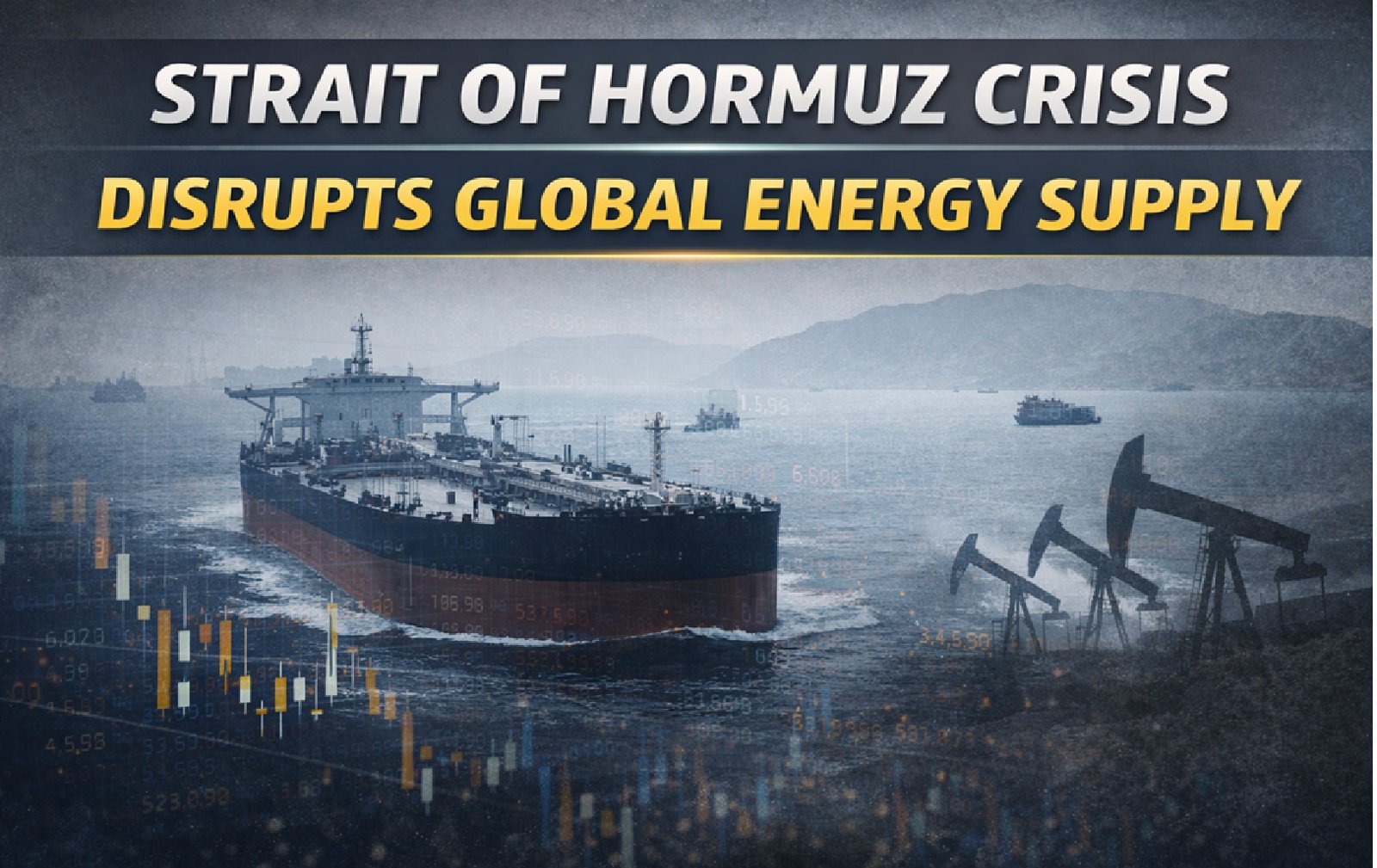
Strait of Hormuz Crisis Disrupts Global Energy Supply, Triggering Oil Price Volatility
Strait of Hormuz Crisis Disrupts Global Energy Supply, Triggering Oil Price Volatility
Strait of Hormuz Crisis Disrupts Global Energy Supply: Shipping disruptions in the Strait of Hormuz are threatening global oil supplies and driving energy price volatility, raising concerns about international trade and economic stability.
Strait of Hormuz Crisis Disrupts Global Energy Supply, Triggering Oil Price Volatility
Amit Kaul – For Digital Desk, Bengaluru: March 13, 2026 – Growing instability in the Middle East has once again drawn global attention to one of the world’s most critical maritime corridors—the Strait of Hormuz. Recent shipping disruptions in the region have raised serious concerns among governments, energy companies, and financial markets about the stability of global oil supplies.
The narrow waterway, located between the Persian Gulf and the Gulf of Oman, serves as a crucial gateway for global energy transportation. Experts estimate that roughly 20 percent of the world’s oil supply passes through the Strait of Hormuz every day. Any disruption in this vital corridor can quickly ripple across global energy markets and influence the broader global economy.
https://digitalamitkaul.online/global-markets-volatility-geopolitical-tensions/
Strategic Importance of the Strait of Hormuz
The Strait of Hormuz is widely regarded as one of the most strategically significant shipping lanes in the world. Oil produced in major energy-exporting countries—including Saudi Arabia, Iraq, Kuwait, and the United Arab Emirates—must pass through this narrow channel before reaching international markets.
At its narrowest point, the strait is only about 33 kilometers (21 miles) wide, making it highly vulnerable to geopolitical tensions and maritime security threats. Despite its limited width, it supports a massive volume of tanker traffic transporting crude oil, liquefied natural gas, and refined petroleum products.
Because of this strategic importance, even minor disruptions can create major concerns about energy security and global supply stability.
Strait of Hormuz Crisis Disrupts Global Energy Supply: Shipping Disruptions Raise Global Concerns
Recent reports of shipping disruptions in the region have heightened fears about the reliability of energy supply chains. Maritime operators have reported increased security risks, prompting some shipping companies to reconsider routes or delay shipments through the strait.
Insurance costs for oil tankers operating in the region have also risen, reflecting the elevated risk associated with geopolitical tensions. When shipping costs increase, those expenses often cascade throughout the energy supply chain, eventually impacting fuel prices for consumers worldwide.
The disruptions have triggered warnings from industry analysts that prolonged instability in the strait could significantly impact global energy markets.
Oil Prices React to Uncertainty
Energy markets have already begun responding to the growing uncertainty. Oil prices have shown signs of volatility as investors and traders closely monitor developments in the region.
Geopolitical tensions historically play a major role in influencing oil prices. When investors fear supply disruptions, they often react quickly by adjusting trading strategies, which can lead to rapid price fluctuations.
Higher oil prices can affect multiple sectors of the global economy, including transportation, manufacturing, and agriculture. Increased fuel costs can also contribute to inflation, placing additional pressure on consumers and businesses.
Strait of Hormuz Crisis Disrupts Global Energy Supply: Impact on Global Trade and Shipping
The potential consequences of disruptions in the Strait of Hormuz extend far beyond energy markets. The corridor also serves as a vital route for global maritime trade, connecting markets across Asia, Europe, and Africa.
Container shipping, liquefied natural gas shipments, and other commercial cargo frequently transit through the region. If tensions escalate and maritime operations are restricted, global supply chains could face additional challenges.
International shipping companies and logistics operators are closely monitoring the situation to assess potential risks to trade routes and delivery timelines.
Governments Call for Stability
In response to the growing concerns, governments around the world have called for stability and secure navigation through the Strait of Hormuz. International cooperation is often required to ensure that maritime routes remain open and safe for commercial shipping.
Global organizations and diplomatic channels are actively working to encourage dialogue among regional actors to prevent further escalation. Maintaining stability in the region remains a priority for many governments due to its critical role in global energy supply.
Security analysts emphasize that ensuring the free flow of energy through the Strait is essential for maintaining economic stability worldwide.
Long-Term Energy Security Concerns
The current situation has also revived discussions about long-term energy security and the need for diversification of global energy sources. Many countries have already begun investing heavily in renewable energy and alternative fuel technologies to reduce dependence on volatile geopolitical regions.
While oil remains a major component of the global energy mix, transitions toward renewable energy sources are gradually reshaping the global energy landscape.
However, experts caution that the transition will take time, meaning disruptions in key oil supply routes such as the Strait of Hormuz will continue to influence global markets in the foreseeable future.
A Critical Moment for Global Energy Markets
The developments surrounding the Strait of Hormuz highlight the delicate balance that underpins the global energy system. A single maritime corridor plays a pivotal role in maintaining the stability of oil supplies that power economies worldwide.
https://aamnewsnetwork.com/us-200m-edge-ai-indo-pacific-smartphone-innovation/
As geopolitical tensions evolve, governments, energy producers, and financial markets will continue to watch the situation closely. The coming weeks could prove decisive in determining whether disruptions remain temporary or escalate into a broader crisis affecting global energy security.
For now, the Strait of Hormuz remains a focal point in international geopolitics—underscoring the profound connection between regional tensions and the global economy.
Author Bio:
Amit Kaul is a seasoned journalist and digital content strategist with over a decade of experience covering business, technology, finance, and digital economy trends. Based in Bengaluru, India, he specializes in producing high-quality, data-driven news articles optimized for global audiences and digital platforms. Amit is passionate about financial inclusion, fintech innovations, and economic developments that shape India and the world. His work has been featured on multiple news portals and Google News platforms, providing readers with timely and reliable insights.



Pingback: US Strikes Iran’s Key Oil Hub as Middle East War Escalates - ANN
Pingback: Israel-Iran War Day 16: IDF Launches Extensive Strikes on Western Iran - DNN
Pingback: Nashik TCS Case: AGM Ashwini Chhanani Sent to Judicial Custody, Mastermind Nida Khan Still Absconding - DNN