
Damaged Shield at Chernobyl: Drone Strike Cripples Nuclear Containment Structure, Risking Radioactive Leak
Damaged Shield at Chernobyl: Drone Strike Cripples Nuclear Containment Structure, Risking Radioactive Leak
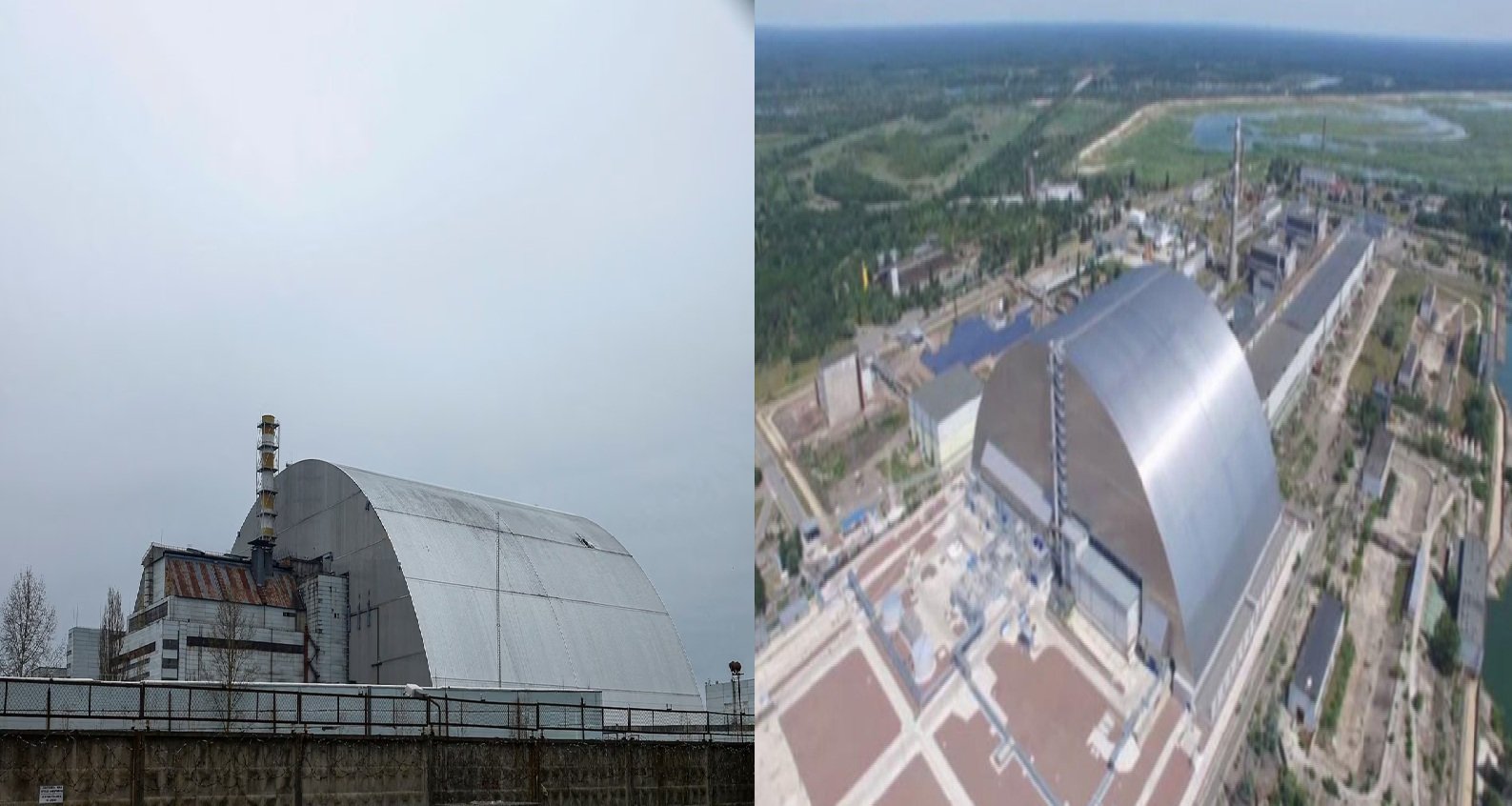
Damaged Shield at Chernobyl: The protective “New Safe Confinement” at Chernobyl has lost its primary safety functions after a 2025 drone strike, says the International Atomic Energy Agency (IAEA). While radiation levels remain stable for now, experts warn that urgent repairs are needed to avert long-term nuclear risk.
Damaged Shield at Chernobyl — What Happened
A steel protective shelter at the Chernobyl site — built to confine radioactive remains of the 1986 reactor disaster — has reportedly lost its confinement capability following a drone strike, the UN nuclear watchdog has warned.
The structure, known as the New Safe Confinement (NSC), which spans the remains of Reactor 4, was installed in 2016–2019 to enclose the original sarcophagus and prevent leakage of radioactive contaminants.
On 14 February 2025, according to Ukrainian authorities, a drone carrying a high-explosive warhead struck the shelter, causing a fire and damaging the outer cladding around Reactor 4.
Following inspections conducted by the IAEA in late 2025, the agency confirmed that the NSC “had lost its primary safety functions, including the confinement capability.”
What Is the New Safe Confinement — and Why It Matters
The New Safe Confinement is a massive steel arch structure — one of the biggest land-based engineering feats of recent decades — built to enclose the damaged Reactor 4 and its hastily erected sarcophagus. Its purpose: to keep radioactive dust and materials contained, shield them from weather, and enable eventual dismantling under safe conditions.
With the NSC now reportedly compromised, the radioactive remains inside are technically no longer fully contained. Although the IAEA said that load-bearing structures and monitoring systems remain intact, the loss of the “confinement capability” represents a serious long-term risk.
Damaged Shield at Chernobyl: What the Experts Say & What’s Being Done
IAEA Director General Rafael Mariano Grossi stressed that while radiation levels around Chernobyl have stayed “stable” so far, the damaged shelter cannot be allowed to deteriorate further. Limited temporary repairs (notably to the roof) have already been made. But he emphasised that comprehensive restoration is “essential to prevent further degradation and ensure long-term nuclear safety.”
The call for urgent repairs reflects growing unease about the vulnerability of nuclear-waste containment structures in conflict zones — especially given the ongoing war in Ukraine.
Damaged Shield at Chernobyl: Why It Matters — Global and Environmental Stakes
Radiation containment risk: The original 1986 disaster spread radiation across Europe. The NSC was meant to lock that danger away permanently. With its core safety function compromised, there’s renewed anxiety over potential leaks — especially if the structure suffers further damage.
Nuclear safety in war zones: The incident starkly highlights how warfare endangers not just lives and infrastructure, but legacy nuclear disaster sites — long after the original accident.
Environmental and public-health implications: A breach or collapse of containment could threaten ecosystems and public health, inside Ukraine and potentially beyond.
International cooperation required: Restoring such a complex structure will require global coordination, oversight, and funding — underscoring the long-term consequences of conflict.
What Next: Watch for Repairs and Oversight
As of now, radiation levels remain reportedly normal and stable. But with the NSC’s loss of confinement function, prompt and thorough repair — covering structural, containment, and monitoring aspects — is critical. The international community, led by the IAEA and backed by reconstruction funds, must prioritise safeguarding Chernobyl’s legacy.
https://aamnewsnetwork.com/tensions-flare-spin-boldak-border-clash-4-civilians-killed-dec-2025/
For observers and global citizens alike: this is a reminder that the disasters of the past — especially nuclear ones — remain vulnerable unless protected over decades. Conflict doesn’t just end with ceasefires; its fallout can linger, often in invisible but deeply dangerous ways.



Pingback: Australia Becomes First Country to Ban Social Media for Users Under 16: A Global Debate Begins - ANN