
Why Did Ajit Doval Leave the SCO Summit Midway? Pakistan’s Act Created a Major Ruckus
Why Did Ajit Doval Leave the SCO Summit Midway? Pakistan’s Act Created a Major Ruckus
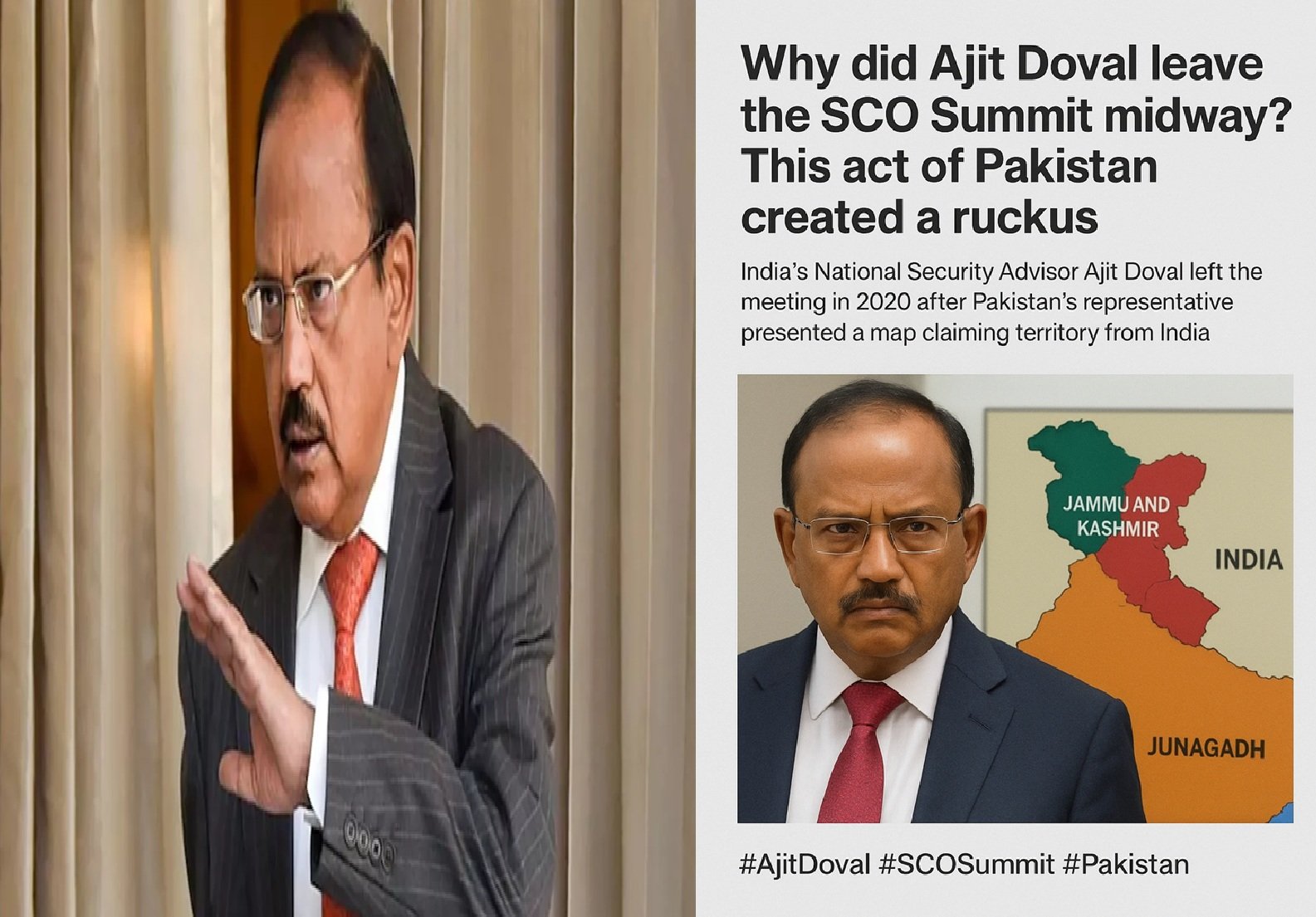
Why Did Ajit Doval Leave the SCO Summit Midway: India’s NSA Ajit Doval walked out of the SCO Summit after Pakistan displayed a controversial political map claiming Jammu & Kashmir and Junagadh. This bold move by Doval sent a strong message to Pakistan and the world on India’s sovereignty.
Pakistan’s Act Sparked Controversy at the SCO Summit
Prime Minister Narendra Modi was in China for the SCO Summit, where he held an hour-long meeting with Chinese President Xi Jinping. However, what caught everyone’s attention was the recall of an incident from 2020 when India’s National Security Advisor Ajit Doval staged a dramatic walkout from the SCO meeting after an objectionable act by Pakistan.
At that time, the Summit was being held virtually due to the COVID-19 pandemic, and the meeting was chaired by Russia.
Why Did Ajit Doval Leave the SCO Summit: Pakistan Presented a Controversial Political Map
During the meeting, Pakistan’s representative Dr. Moeed Yusuf presented a political map falsely claiming Jammu & Kashmir and Junagadh as part of Pakistan. This provocative act was a clear violation of the SCO Charter, which strictly prohibits bringing bilateral disputes into multilateral forums.
India’s Strong Objection and Ajit Doval’s Exit
India immediately objected to Pakistan’s move. Despite repeated warnings, the Pakistani representative refused to remove the map, prompting Ajit Doval to exit the meeting. His action was a strong diplomatic signal that India will never compromise on its territorial integrity.
Following this, Russia clarified that it did not support Pakistan’s provocative display and praised Ajit Doval’s bold step. Security experts called Pakistan’s action a “gross violation of SCO norms.”
Ajit Doval: India’s Master Strategist
Known as the James Bond of India, Ajit Doval has an illustrious track record:
Undercover in Pakistan (1971–78): Disguised as a Muslim cleric, he provided intelligence during the Indo-Pak War, which shaped India’s strategy.
Mizo Peace Accord (1986): Negotiated peace with rebel groups.
Operation Black Thunder (1988): Infiltrated the Golden Temple complex to counter militants.
Kandahar Hijack (1999): Played a key role in securing the release of hostages.
ISIS Hostages (2014): Coordinated the safe return of 46 Indian nurses from Iraq.
Surgical Strikes (2016): Oversaw India’s cross-LoC strikes on terrorist camps.
Why Doval’s Walkout Still Matters
Ajit Doval’s decision to walk out of the SCO Summit remains symbolic of India’s firm stance against Pakistan’s propaganda on Kashmir. It underlined New Delhi’s message that India will not tolerate any questioning of its sovereignty on international platforms.


Pingback: Two-Day Joint War Exercise ‘Sagar Kavach-2’ Begins in Paradip to Strengthen Coastal Security - DNN
Pingback: Fierce Encounter in Kulgam: 2 Terrorists Killed, 2 Soldiers Martyred in South Kashmir - DNN
Pingback: India-China Resume Direct Flights: A Milestone in Bilateral Relations - ANN