
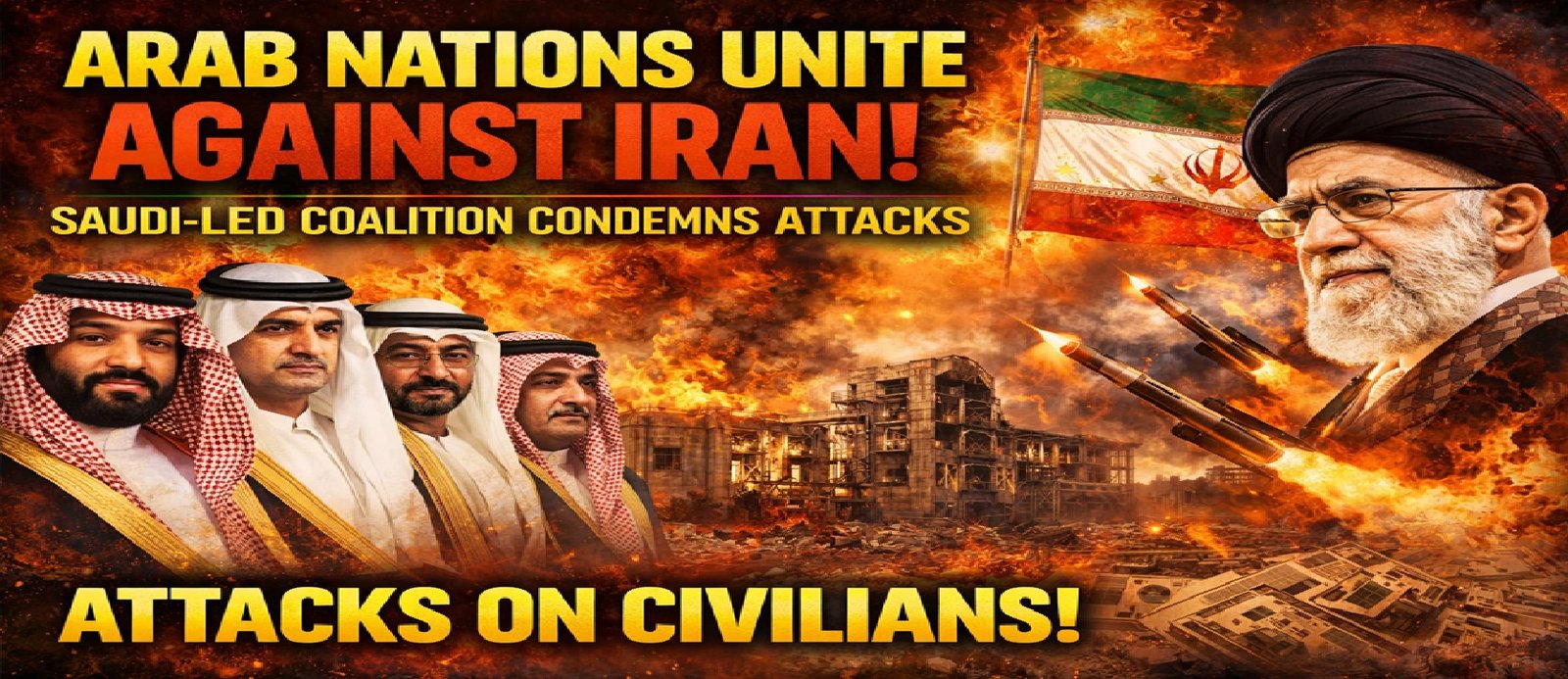
Arab Nations Unite Against Iran: Saudi-Led Coalition Condemns Attacks on Civilian Infrastructure
Arab Nations Unite Against Iran: Saudi-Led Coalition Condemns Attacks on Civilian Infrastructure
Arab nations unite against Iran as a Saudi-led coalition condemns missile and drone attacks on civilian infrastructure across the Gulf. Read the latest global political and energy crisis update (March 19, 2026).
Amit Kaul – For Digital Desk, Bengaluru: March 19, 2026 – The geopolitical landscape of the Middle East has entered a dangerous new phase on March 19, 2026, as Arab nations unite against Iran, forming a strong Saudi-led coalition that has sharply condemned recent attacks targeting civilian infrastructure across the Gulf region.
This unified stance marks a significant escalation in regional tensions, with multiple Arab countries accusing Iran of launching missile and drone strikes on oil facilities, residential areas, and critical infrastructure. The developments have not only heightened security concerns but also intensified fears of a broader regional war with global consequences.
https://aamnewsnetwork.com/iran-retaliatory-strikes-israel-gulf-war-escalation/
⚔️ Saudi Arabia Leads Strong Condemnation: Arab Nations Unite Against Iran
Saudi Arabia has taken the lead in rallying Arab nations against Iran’s actions. In a high-level diplomatic response, Riyadh condemned what it described as “unjustified and aggressive attacks” on sovereign nations and civilian targets.
According to recent reports, Saudi officials warned that trust between Iran and its Arab neighbors has been “completely shattered”, signaling a major breakdown in diplomatic relations.
The Kingdom has also indicated that military retaliation remains a possibility, although it continues to emphasize diplomacy as the preferred path forward.
This shift in tone reflects growing frustration among Gulf nations, many of which have faced repeated attacks in recent weeks.
🌐 Arab League and GCC Show Unified Front
The response from the broader Arab world has been swift and coordinated. The League of Arab States and the Gulf Cooperation Council (GCC) held emergency meetings to address the escalating crisis.
In a joint statement, Arab foreign ministers condemned Iran’s actions as:
- A violation of international law
- A threat to regional stability
- An attack on civilian infrastructure and sovereignty
Officials confirmed that multiple countries—including Saudi Arabia, UAE, Qatar, Bahrain, Kuwait, and Jordan—were targeted in the attacks.
The GCC further emphasized that Iranian strikes had caused significant damage to civilian facilities, residential areas, and essential services, creating widespread fear among populations.
This rare level of unity highlights the seriousness of the situation and signals a potential shift toward collective regional action.
🚀 Iran’s Escalation: Strikes on Energy and Civilian Targets
The crisis intensified after Iran launched retaliatory attacks following earlier strikes on its South Pars gas field, one of the world’s largest energy hubs.
According to reports, Iranian drone and missile attacks have targeted:
- Oil refineries in Saudi Arabia
- LNG facilities in Qatar
- Energy infrastructure in the UAE
- Residential and civilian zones across Gulf nations
These attacks have disrupted energy production and triggered a global oil price surge, with crude prices crossing $110–$118 per barrel.
The targeting of civilian infrastructure has drawn particularly strong condemnation, as it raises serious concerns about violations of international humanitarian law.
🌍 Global Reactions and UN Involvement: Arab Nations Unite Against Iran
The international community has also responded strongly to the escalating conflict.
The United Nations Security Council adopted a resolution condemning Iran’s actions, describing them as “egregious attacks” on neighboring states and calling for an immediate halt to hostilities.
Meanwhile, global powers including the United States, European nations, and Japan have urged restraint while warning of severe economic consequences if the conflict continues.
At the same time, military tensions are rising. Reports suggest increased defense deployments in the region, while the United States is considering additional funding for operations linked to the ongoing conflict.
💰 Energy Crisis and Economic Impact
One of the most immediate consequences of the crisis is its impact on global energy markets.
The Middle East is a critical hub for global oil and gas supply, and disruptions in the region have already caused:
- Sharp increases in oil prices
- Rising fuel costs worldwide
- Volatility in global stock markets
Energy infrastructure attacks and threats to key shipping routes such as the Strait of Hormuz have further intensified the crisis.
Experts caution that persistent instability may result in:
- Global inflation spikes
- Supply chain disruptions
- Economic slowdown or recession
For many countries, especially energy-dependent economies, the situation is becoming increasingly difficult.
⚠️ Risk of Wider Regional Conflict: Arab Nations Unite Against Iran
The biggest concern now is the potential for the conflict to expand beyond current boundaries.
With multiple countries involved and rising military tensions, analysts warn of:
- Possible confrontation between Iran and Gulf nations
- Increased involvement of global powers
- Spillover into neighboring regions such as Lebanon and Iraq
Saudi Arabia and its allies have made it clear that any further attacks will not go unanswered, raising the risk of a full-scale regional war.
🔮 What Happens Next?
The course of this crisis will be determined in large part during the next few days.
Key developments to watch include:
- Diplomatic efforts to de-escalate tensions
- Potential military responses from Gulf nations
- Stability of global energy markets
- Further actions by the United Nations and global powers
While diplomacy remains on the table, the current trajectory suggests that tensions may continue to rise before any resolution is reached.
https://digitalamitkaul.online/iran-missile-uae-military-base-foreign-forces-2/
📝 Conclusion
The unification of Arab nations against Iran marks a turning point in Middle Eastern geopolitics. What began as isolated strikes has now evolved into a broader regional confrontation with global implications.
As Saudi Arabia leads a coalition condemning attacks on civilian infrastructure, the stakes have never been higher. The world now watches closely, as the decisions made in the coming days could shape the future of the region—and the global economy—for years to come.
Author Bio:
Amit Kaul is a seasoned journalist and digital content strategist with over a decade of experience covering business, technology, finance, and digital economy trends. Based in Bengaluru, India, he specializes in producing high-quality, data-driven news articles optimized for global audiences and digital platforms. Amit is passionate about financial inclusion, fintech innovations, and economic developments that shape India and the world. His work has been featured on multiple news portals and Google News platforms, providing readers with timely and reliable insights.



Pingback: Iran War Enters Fourth Week: Global Tensions Rise as Conflict Intensifies Across the Middle East - DNN
Pingback: UN Slams Iran Attacks: India Backs Resolution, Russia & China Abstain — Big Global Signal - ANN