
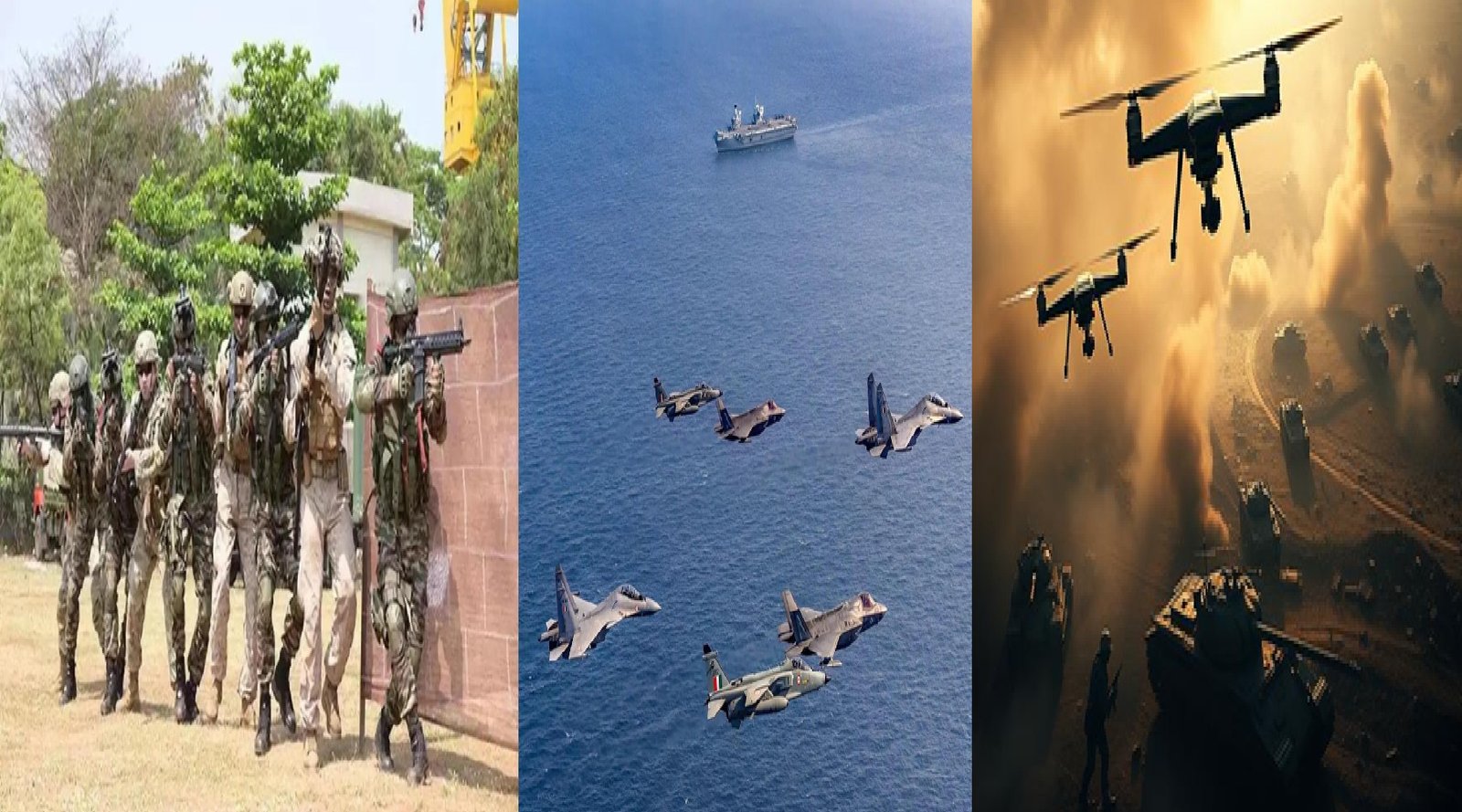
Indian Army Preparing to Win Next War, Including Space and Cyber Domains: Former Army Chief JJ Singh
Indian Army Preparing to Win Next War, Including Space and Cyber Domains: Former Army Chief JJ Singh
Indian Army Preparing to Win Next War: Former Army Chief General (Retd.) JJ Singh says the Indian Army is preparing to fight and win the next war across land, air, sea, cyber, and space domains. Read full analysis.
Indian Army Preparing to Win Next War: India’s Military Focus Shifts to Multi-Domain Warfare
Amit Kaul – For Digital Desk, Bengaluru: April 9, 2026 – In a significant statement highlighting India’s evolving defense posture, former Army Chief General JJ Singh has asserted that the Indian Army is actively preparing to “fight and win the next war.” His remarks underline a critical transformation in military strategy, where future conflicts will extend far beyond traditional battlefields.
Speaking at a recent defense event, Singh emphasized that warfare is no longer confined to land, air, and sea. Instead, it is rapidly expanding into newer and highly complex domains such as cyber, space, and even the cognitive sphere — where information, perception, and psychological influence play decisive roles.
This shift reflects a broader global trend where nations are rethinking their defense strategies in response to emerging threats and technological advancements.
https://aamnewsnetwork.com/india-approves-5-more-s400-air-defence-systems-iran-israel-war/
Beyond Traditional Battlefields: The Rise of Hybrid Warfare
General Singh’s statement reinforces the idea that future wars will be “multi-domain operations,” requiring seamless coordination across diverse battle environments. These include:
- Land Warfare: Conventional ground operations remain crucial but are increasingly supported by advanced technologies.
- Air and Naval Power: Dominance in the skies and seas continues to be a strategic priority.
- Cyber Warfare: Protecting critical infrastructure from cyberattacks has become a national security imperative.
- Space Domain: Satellites and space-based assets now play a pivotal role in communication, surveillance, and navigation.
- Cognitive Domain: Information warfare, including propaganda and psychological operations, can shape outcomes without direct combat.
Singh highlighted that the Indian Army is preparing precisely for this integrated form of warfare, ensuring readiness across all these domains simultaneously.
Space: The Next Strategic Frontier
One of the most striking aspects of Singh’s remarks was his emphasis on space as a potential origin point for future conflicts. He noted that “the next war may very well originate in space,” signaling the growing importance of safeguarding India’s orbital assets.
India has already taken steps in this direction, including advancements in satellite technology and anti-satellite capabilities. Strengthening space infrastructure is now seen as essential for maintaining strategic superiority.
Space-based systems are critical for:
- Real-time surveillance and reconnaissance
- Secure communication networks
- Navigation and targeting systems
- Early warning mechanisms
Any disruption in these systems could significantly impact military operations, making space security a top priority.
Indian Army Preparing to Win Next War: Insights from Strategic Experts and National Security Discourse
The statement was made during the launch of a compilation featuring insights from leading defense and strategic experts. According to Singh, the publication provides a comprehensive overview of the challenges India faces in its immediate neighborhood as well as the broader global landscape.
He pointed out that modern security challenges are no longer limited to military threats alone. Economic stability, technological innovation, and geopolitical dynamics are equally critical components of national security.
The book reportedly covers:
- Regional security challenges in South Asia
- Global geopolitical turbulence
- Economic vulnerabilities impacting defense readiness
- Technological disruptions shaping warfare
This holistic approach underscores the need for integrated policymaking that combines military strength with economic and technological resilience.
Indian Army Preparing to Win Next War: India’s Preparedness in a Turbulent Global Order
General Singh’s remarks come at a time when the global security environment is increasingly volatile. Rising geopolitical tensions, rapid technological advancements, and the proliferation of non-traditional threats have made defense preparedness more complex than ever.
https://digitalamitkaul.online/operation-arahama-ganderbal-encounter-terrorist-neutralized-kashmir/
India, given its strategic location and regional dynamics, faces a unique set of challenges. These include:
- Border tensions and regional disputes
- Cyber threats targeting critical infrastructure
- The need to secure maritime routes
- Increasing competition in the Indo-Pacific region
In this context, the Indian Army’s focus on future-ready capabilities reflects a proactive approach aimed at maintaining deterrence and ensuring national security.
The Road Ahead: Integrated and Adaptive Defense Strategy
The evolving nature of warfare demands a shift from siloed operations to a fully integrated defense framework. General Singh’s statement suggests that India is moving in this direction by investing in advanced technologies, enhancing inter-service coordination, and strengthening strategic infrastructure.
Key priorities for the future include:
- Developing indigenous defense technologies
- Expanding cyber defense capabilities
- Enhancing space security infrastructure
- Building resilience against hybrid threats
- Strengthening joint operations among the Army, Navy, and Air Force
Conclusion
General (Retd.) JJ Singh’s assertion that the Indian Army is preparing to fight and win the next war serves as a powerful reminder of the changing nature of global conflict. As warfare extends into cyber, space, and cognitive domains, India’s defense strategy is evolving to meet these challenges head-on.
The emphasis on multi-domain readiness, technological advancement, and strategic foresight reflects a clear commitment to safeguarding national interests in an increasingly unpredictable world.
Author Bio:
Amit Kaul is a seasoned journalist and digital content strategist with over a decade of experience covering business, technology, finance, and digital economy trends. Based in Bengaluru, India, he specializes in producing high-quality, data-driven news articles optimized for global audiences and digital platforms. Amit is passionate about financial inclusion, fintech innovations, and economic developments that shape India and the world. His work has been featured on multiple news portals and Google News platforms, providing readers with timely and reliable insights.



Pingback: Manipur Tensions Escalate: Six Arrested for Attacking Police, Public Outrage After Children Killed in Bomb Blast - ANN
Pingback: Brahmastra in the Desert: Indian Army Unleashes Apache’s “Tank in the Sky” Power - DNN
Pingback: Kanker Encounter: ₹5 Lakh Reward Maoist Commander ‘Rupi’ Killed in Major Security Breakthrough - DNN
Pingback: India’s ‘Killer’ Missile Power Reshapes Naval Warfare: Can BrahMos Really Threaten China’s Aircraft Carrier Fujian? - ANN
Pingback: DRDO Prepares for Major Missile Test in Bay of Bengal; NOTAM Issued Near Abdul Kalam Island - DNN