
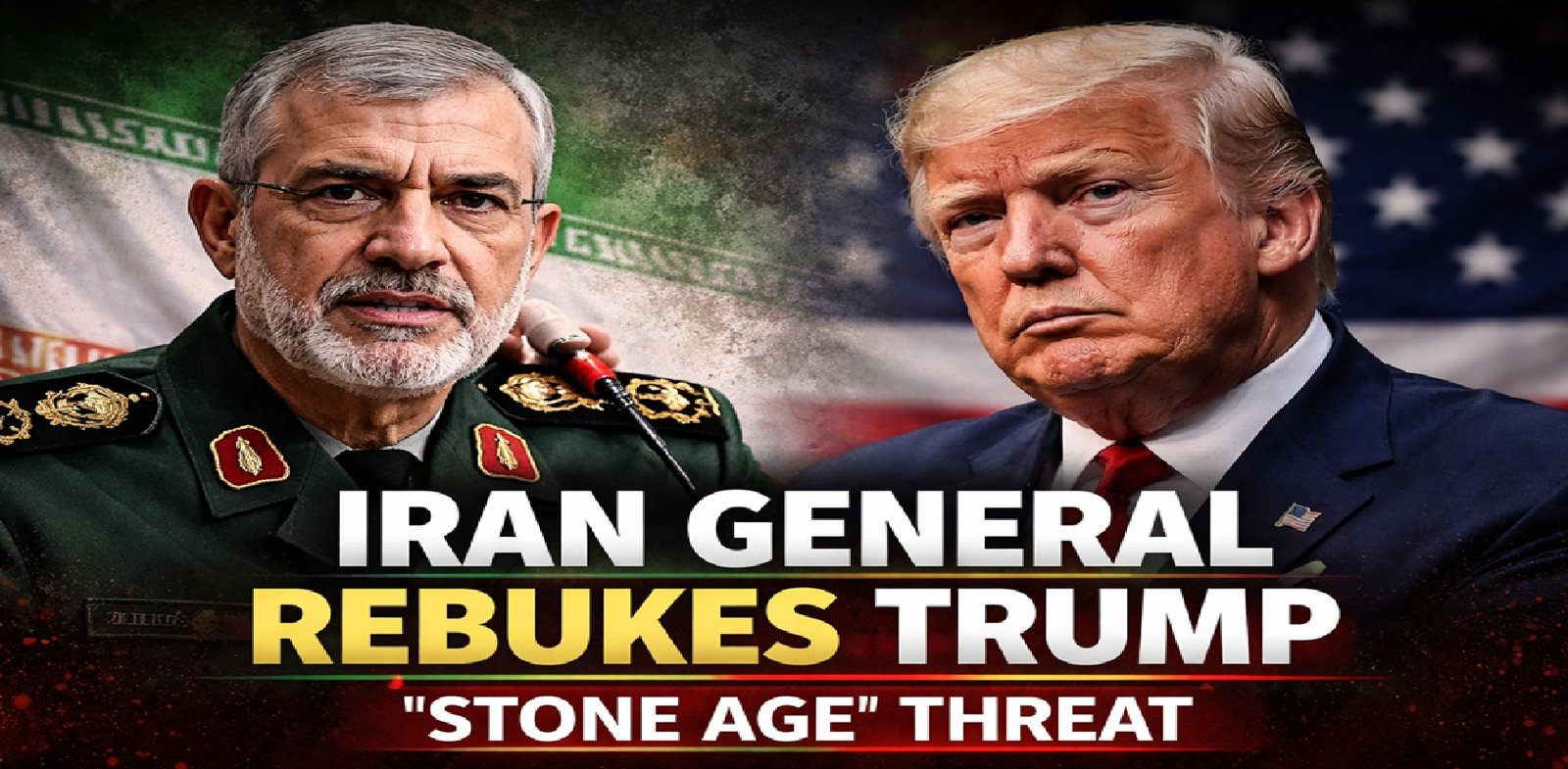
‘250-Year-Old Nation vs 6,000-Year Civilization’: Iranian General Fires Back at Trump’s ‘Stone Age’ Warning
‘250-Year-Old Nation vs 6,000-Year Civilization’: Iranian General Fires Back at Trump’s ‘Stone Age’ Warning
‘250-Year-Old Nation vs 6,000-Year Civilization’: An Iranian IRGC commander sharply rebukes Donald Trump’s ‘Stone Age’ threat, highlighting tensions between the US and Iran amid escalating geopolitical rhetoric.
‘250-Year-Old Nation vs 6,000-Year Civilization’: Iran Slams ‘Stone Age’ Threat as War of Words Escalates with US
Amit Kaul – For Digital Desk, Bengaluru: April 2, 2026 – Tensions between Iran and the United States have intensified once again after a senior Iranian military commander issued a sharp and symbolic rebuke to former US President Donald Trump over his controversial “Stone Age” warning. The exchange underscores a growing war of words that reflects deeper geopolitical friction between the two long-standing adversaries.
Brigadier General Seyyed Majid Mousavi, who leads the Aerospace Force of Iran’s Islamic Revolutionary Guard Corps (IRGC), did not hold back in his response. Reacting to remarks attributed to Trump, Mousavi accused the United States of engaging in what he described as “delusional rhetoric,” fueled by what he termed “Hollywood-style fantasies.”
https://aamnewsnetwork.com/iran-retaliatory-strikes-israel-gulf-war-escalation/
‘You Are Leading Your Soldiers to Their Graves’
In a strongly worded statement posted on the social media platform X, Mousavi directly countered the US narrative. He asserted that it is not Iran that faces destruction, but rather American forces who are being placed in harm’s way by aggressive policies.
“It is you who are leading your soldiers toward their graves—not Iran,” Mousavi wrote, pushing back against the suggestion that Tehran could be forced “back into the Stone Age.”
The Iranian general’s comments reflect a broader sentiment within Tehran’s military establishment—that external threats only reinforce domestic resolve rather than weaken it. His remarks also signal Iran’s readiness to respond rhetorically, and potentially strategically, to any escalation.
Civilization vs Modern Power: A Symbolic Clash
At the heart of Mousavi’s response lies a powerful historical comparison. He contrasted the relatively short history of the United States—roughly 250 years—with what he described as Iran’s 6,000-year-old civilization.
“It is nothing more than a folly for a country with a history of only 250 years to threaten a civilization over 6,000 years old,” he said.
This framing is not new in Iranian political discourse. Iranian leaders often invoke the country’s ancient Persian heritage to project resilience and continuity in the face of external pressure. By emphasizing civilizational depth, Tehran seeks to position itself as enduring and culturally rooted, in contrast to what it portrays as transient Western power.
Trigger Point: US Defense Narrative
The exchange was reportedly sparked by commentary linked to US Defense Secretary Pete Hegseth, amplifying tensions already simmering between Washington and Tehran. While such rhetoric is not uncommon in US-Iran relations, the intensity and tone of the current statements have drawn renewed global attention.
Trump’s “Stone Age” remark, widely circulated online, is being interpreted by Iranian officials as a direct threat of overwhelming military action. In response, Tehran’s leadership appears keen to counter not just the substance, but also the symbolism of such language.
‘250-Year-Old Nation vs 6,000-Year Civilization’: A Familiar Pattern of Escalation
The latest verbal clash fits into a long-standing pattern of antagonistic exchanges between the US and Iran, dating back decades. From sanctions and nuclear negotiations to proxy conflicts across the Middle East, both nations have frequently engaged in high-stakes rhetoric.
However, analysts note that such statements, while dramatic, often serve dual purposes—projecting strength internationally while consolidating support domestically. For Iran, defiance against the US plays well with nationalist audiences. For American leaders, strong rhetoric can signal resolve and deterrence.
‘250-Year-Old Nation vs 6,000-Year Civilization’: Global Implications and Strategic Messaging
While the exchange may appear rhetorical on the surface, it carries deeper strategic implications. Military language—especially references to destruction or existential threats—can heighten tensions in an already volatile region.
The Middle East remains a geopolitical flashpoint, with multiple actors and overlapping conflicts. Any escalation in US-Iran rhetoric risks influencing regional dynamics, including relations with allies, proxy groups, and global powers.
Mousavi’s comments, therefore, are not just a rebuttal—they are a calculated message aimed at multiple audiences: Washington, regional players, and the Iranian public.
Conclusion: Words That Echo Beyond Borders
The sharp exchange between the Iranian military leadership and Donald Trump highlights how rhetoric continues to play a central role in international relations. While no immediate military action has followed, the language used on both sides underscores the fragile nature of US-Iran ties.
As both nations navigate a complex geopolitical landscape, such statements serve as reminders that even words—when amplified on global platforms—can shape perceptions, influence strategies, and potentially alter the course of diplomacy.
For now, the war of words continues, but its consequences may extend far beyond speeches and social media posts.
Author Bio:
Amit Kaul is a seasoned journalist and digital content strategist with over a decade of experience covering business, technology, finance, and digital economy trends. Based in Bengaluru, India, he specializes in producing high-quality, data-driven news articles optimized for global audiences and digital platforms. Amit is passionate about financial inclusion, fintech innovations, and economic developments that shape India and the world. His work has been featured on multiple news portals and Google News platforms, providing readers with timely and reliable insights.



Pingback: Iran-US Tensions Escalate: US Bases on High Alert After Iran’s ‘Stone Age’ Warning - ANN
Pingback: Blindfolded and Forced to Kneel: What Happens When American Soldiers Are Captured in Iran? - DNN
Pingback: Iran Declares ‘US Defeat’ as Trump Defends Operation; F-15 Pilot Rescue Sparks Global Controversy - ANN