
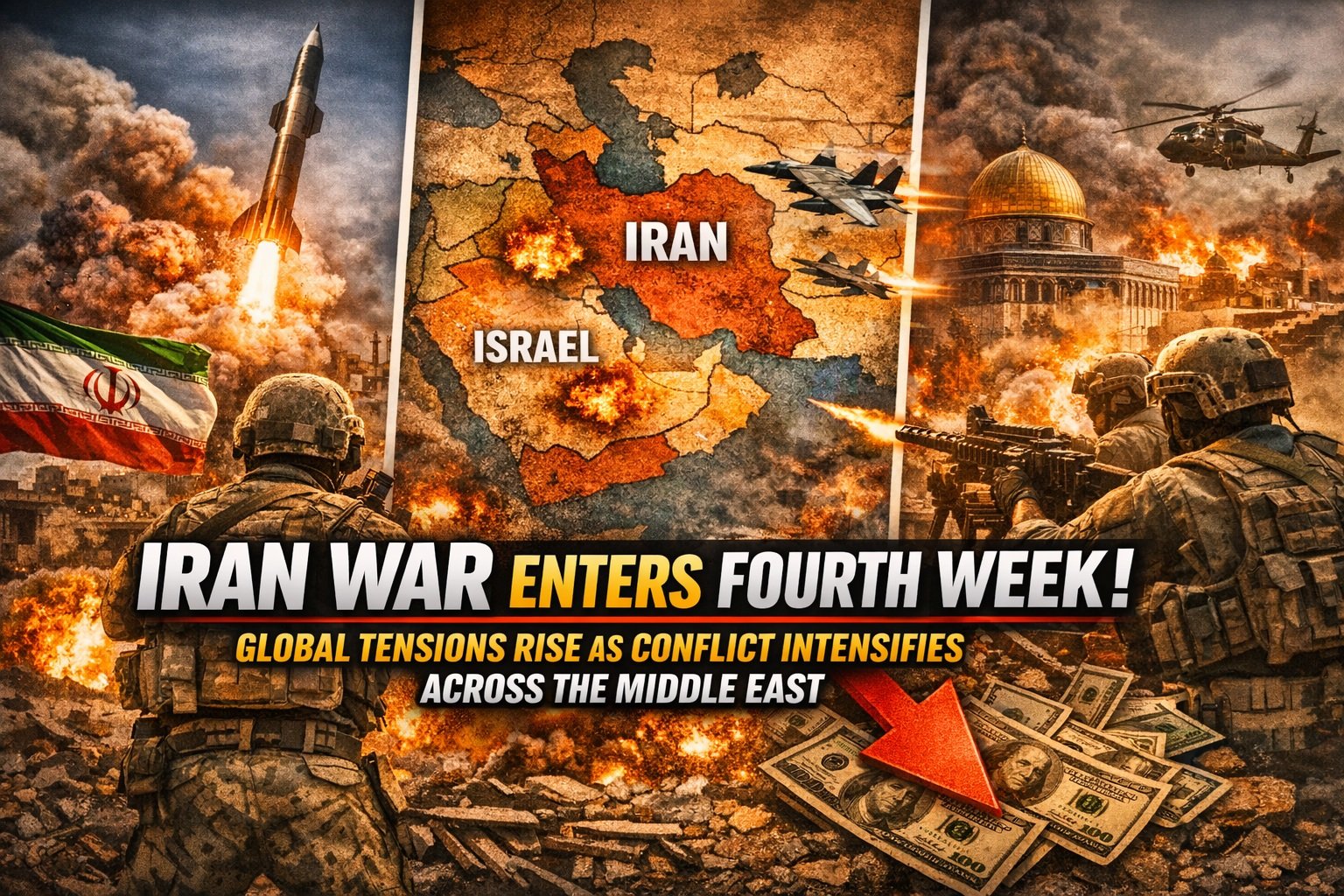
Iran War Enters Fourth Week: Global Tensions Rise as Conflict Intensifies Across the Middle East
Iran War Enters Fourth Week: Global Tensions Rise as Conflict Intensifies Across the Middle East
Iran war enters fourth week with escalating strikes across the Middle East, disrupting energy supply, raising oil prices, and increasing global tensions and recession fears.
Amit Kaul – For Digital Desk, Bengaluru: March 20, 2026 – The Iran war has entered its fourth week on March 20, 2026, marking a dangerous escalation in one of the most volatile conflicts in recent history. What began as targeted military strikes has now evolved into a multi-front regional crisis, impacting global energy markets, geopolitical stability, and civilian populations across the Middle East.
As missile strikes intensify and new regions are drawn into the conflict, global leaders are warning that the situation could spiral into a wider international confrontation with long-term economic consequences.
https://aamnewsnetwork.com/global-crisis-war-energy-shock-oil-prices-recession-march-19-2026/
⚔️ Escalation Across the Middle East: Iran War Enters Fourth Week
Over the past few days, the conflict has intensified significantly, with continuous missile and drone strikes reported across multiple countries. Iran has expanded its retaliation beyond Israel, targeting energy infrastructure and strategic assets across Gulf nations, including Kuwait, Saudi Arabia, and the UAE.
Key oil facilities and refineries have been hit, forcing shutdowns and triggering fires. In Kuwait, repeated strikes on refineries have raised fears about sustained energy disruption, while air defense systems in Gulf countries remain on high alert.
Meanwhile, Israel has continued strikes deep inside Iranian territory, including in Tehran, signaling a shift toward a more aggressive military strategy.
This tit-for-tat escalation has transformed the conflict into a regional war with no clear signs of de-escalation.
⚡ Energy Infrastructure Becomes Primary Target
One of the most alarming developments is the direct targeting of energy infrastructure, a move that has significantly raised global concerns.
Recent attacks on major gas fields—including Iran’s South Pars and Qatar’s LNG facilities—have disrupted production and supply chains.
The Strait of Hormuz, a critical global oil transit route, has also been severely affected. Shipping traffic has dropped dramatically due to security threats, impacting nearly 20% of the global oil supply.
As a result:
- Oil prices have surged above $100 per barrel
- Gas prices in Europe have spiked sharply
- Global fuel supply chains are under severe stress
Experts warn that continued attacks on energy infrastructure could trigger a global energy shock worse than previous crises.
💰 Economic Impact: Inflation and Recession Risks: Iran War Enters Fourth Week
The economic fallout from the war is already being felt worldwide.
Rising oil and gas prices are driving inflation across major economies. In the UK, for example, household energy bills are expected to surge significantly due to the conflict’s impact on gas markets.
Global financial markets have also reacted negatively:
- Stock markets are experiencing increased volatility
- Investor confidence is declining
- Supply chains are facing disruptions
Economists warn that if the conflict continues, the world could face a stagflation scenario, where high inflation combines with slow economic growth.
Developing countries are particularly vulnerable, as rising fuel and food prices could lead to economic instability and social unrest.
🌐 Rising Global Tensions
As the war intensifies, global tensions are rising rapidly.
The conflict is no longer limited to Iran and Israel. It now involves:
- Gulf nations are facing direct attacks
- The United States increasing military presence
- European nations are dealing with economic fallout
There are also growing concerns about potential violations of international law, with the United Nations warning that attacks on civilian infrastructure could amount to war crimes.
At the same time, diplomatic efforts to de-escalate the situation have shown limited progress, with both sides continuing aggressive military operations.
🚨 Humanitarian Concerns and Civilian Impact: Iran War Enters Fourth Week
Beyond geopolitics and economics, the human cost of the war is rising rapidly.
Thousands of civilians have been affected by:
- Airstrikes in major cities
- Displacement due to the ongoing conflict
- Damage to essential infrastructure
Reports indicate growing casualties, including women and children, as strikes hit residential areas and urban centers.
The closure of key religious and public sites during major events has further highlighted the severity of the situation, reflecting the deep disruption to daily life in the region.
🔮 What Lies Ahead?
- The fourth week of the Iran war marks a critical turning point.
- Key factors that will determine the future of the conflict include:
- Whether energy infrastructure attacks continue
- Stability of the Strait of Hormuz
- Involvement of additional global powers
- Success (or failure) of diplomatic negotiations
If tensions continue to escalate, the conflict could expand into a broader international war, with severe implications for global security and economic stability.
📝 Conclusion
As the Iran war enters its fourth week, the situation has evolved into a complex global crisis involving military escalation, energy disruption, and economic uncertainty.
From rising oil prices to increasing geopolitical tensions, the impact of this conflict is being felt far beyond the Middle East. The coming weeks will be crucial in determining whether the world moves toward de-escalation or deeper instability.
For now, one thing is clear: the Iran war is no longer a regional issue—it is a global crisis shaping the future of international politics and the world economy.
Author Bio:
Amit Kaul is a seasoned journalist and digital content strategist with over a decade of experience covering business, technology, finance, and digital economy trends. Based in Bengaluru, India, he specializes in producing high-quality, data-driven news articles optimized for global audiences and digital platforms. Amit is passionate about financial inclusion, fintech innovations, and economic developments that shape India and the world. His work has been featured on multiple news portals and Google News platforms, providing readers with timely and reliable insights.



Pingback: Trump’s Iran War Backfires? Rising Oil Prices, NATO Rift & Escalation Fears Put US Strategy in Crisis - DNN