
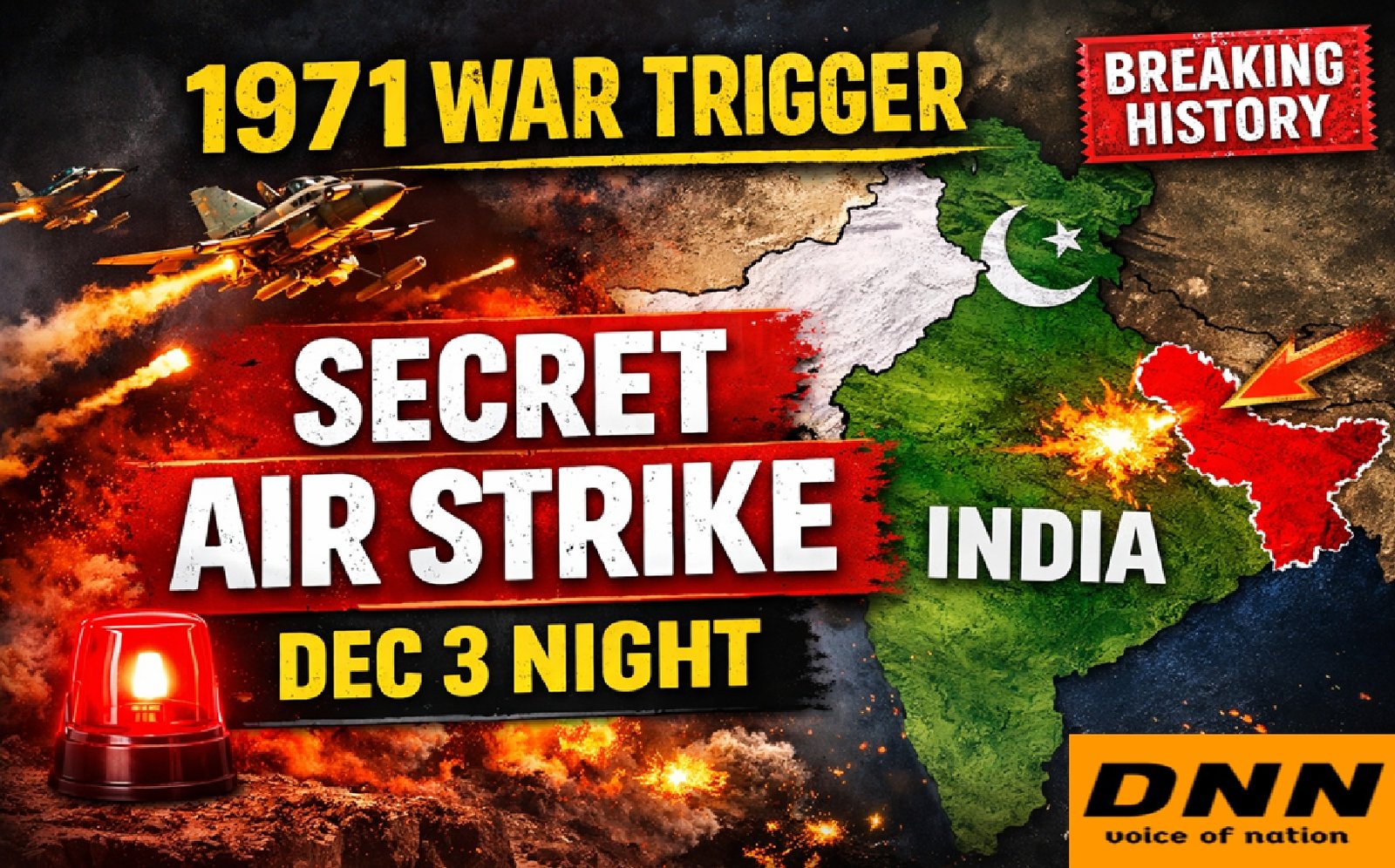
Operation Chengiz Khan: The Secret Strike That Sparked the 1971 India–Pakistan War
Operation Chengiz Khan: The Secret Strike That Sparked the 1971 India–Pakistan War
Discover the full story of Operation Chengiz Khan, Pakistan’s preemptive air strike on December 3, 1971, that triggered the India–Pakistan War and led to the creation of Bangladesh.
Operation Chengiz Khan Explained: The Air Strike That Sparked the 1971 India–Pakistan War
Amit Kaul – For Digital Desk, Bengaluru: April 19, 2026 – On the evening of December 3, 1971, Pakistan launched a calculated and high-risk military operation known as Operation Chengiz Khan. This preemptive air strike targeted multiple Indian airbases and is widely recognized as the formal trigger of the Indo-Pakistani War of 1971—a war that ultimately reshaped the geopolitical map of South Asia and gave rise to Bangladesh.
But what exactly was Operation Chengiz Khan, and why did Pakistan take such a drastic step?
The Background: Crisis in East Pakistan
The roots of the conflict go back to the political turmoil in East Pakistan. In 1970, Pakistan held general elections in which the Awami League, led by Sheikh Mujibur Rahman, secured a majority—primarily due to overwhelming support from East Pakistan.
However, the political establishment in West Pakistan, dominated by leaders like Yahya Khan and Zulfikar Ali Bhutto, refused to transfer power. This led to widespread unrest.
https://aamnewsnetwork.com/hezbollah-vs-israel-war-survival-analysis/
In March 1971, the Pakistan Army launched a brutal military crackdown under Operation Searchlight, targeting Bengali nationalists, intellectuals, and civilians. The violence triggered one of the largest refugee crises in modern history, with nearly 10 million people fleeing to India.
Operation Chengiz Khan: India’s Role and Rising Tensions
India, under Prime Minister Indira Gandhi, found itself dealing with an enormous humanitarian and economic burden due to the influx of refugees. At the same time, India began extending moral, diplomatic, and eventually military support to the Bengali resistance movement, known as the Mukti Bahini.
This support significantly escalated tensions between India and Pakistan. By late 1971, war seemed inevitable.
What Was Operation Chengiz Khan?
Facing growing pressure and anticipating Indian intervention, Pakistan decided to strike first. On December 3, 1971, the Pakistan Air Force launched Operation Chengiz Khan—a series of coordinated air strikes targeting Indian airfields in the western sector.
The attacks were aimed at crippling the Indian Air Force by destroying aircraft on the ground and neutralizing key bases. Targets included airfields in Pathankot, Amritsar, Srinagar, Jodhpur, and Agra.
The strategy bore similarities to Israel’s preemptive strikes during the Six-Day War, where air superiority was achieved early. However, Pakistan’s execution fell short.
Operation Chengiz Khan: Why the Operation Failed
Despite its ambitious design, Operation Chengiz Khan did not achieve its primary objectives. Several factors contributed to its failure:
Limited Damage: The Indian Air Force had already dispersed many of its aircraft, minimizing losses.
Poor Coordination: The strikes lacked precision and failed to deliver a decisive blow.
Quick Indian Response: India responded swiftly, launching counterattacks the same night.
Instead of weakening India, the operation provided New Delhi with the justification it needed to officially enter the war.
India Declares War
Following the air strikes, India formally declared war on Pakistan. Prime Minister Indira Gandhi addressed the nation, stating that Pakistan had attacked India, leaving no choice but to respond.
The conflict quickly escalated into a full-scale war on both eastern and western fronts. However, the primary focus remained on East Pakistan.
The War and Its Outcome
Within just 13 days, Indian forces, in coordination with the Mukti Bahini, achieved a decisive victory in the east. On December 16, 1971, Pakistan’s Eastern Command surrendered in Dhaka, marking the end of the war.
This led to the creation of Bangladesh as an independent nation—one of the most significant geopolitical events in South Asian history.
Strategic and Historical Significance
Operation Chengiz Khan holds a critical place in military history. While intended as a preemptive strike to gain an advantage, it ultimately backfired, accelerating Pakistan’s defeat.
From a strategic perspective, the operation highlights:
- The risks of miscalculated preemptive strikes
- The importance of intelligence and preparedness
- The role of political decisions in military outcomes
https://digitalamitkaul.online/israel-hamas-let-links-india-terror-designation/
Conclusion
Operation Chengiz Khan was more than just an air strike—it was a turning point that set off a chain of events leading to the 1971 India–Pakistan War and the creation of Bangladesh. While Pakistan aimed to seize the initiative, the move instead unified India’s response and hastened a decisive outcome.
Decades later, the operation remains a case study in military strategy, political miscalculation, and the profound consequences of war.
Author Bio:
Amit Kaul is a seasoned journalist and digital content strategist with over a decade of experience covering business, technology, finance, and digital economy trends. Based in Bengaluru, India, he specializes in producing high-quality, data-driven news articles optimized for global audiences and digital platforms. Amit is passionate about financial inclusion, fintech innovations, and economic developments that shape India and the world. His work has been featured on multiple news portals and Google News platforms, providing readers with timely and reliable insights.



Pingback: Donald Trump Signals No Ceasefire Extension with Iran, Hints at Major Deal - DNN
Pingback: Salim Dola Drug Network: Chemical & Pharma Links Raise Serious National Security Concerns - DNN
Pingback: IB Alert: Pakistan Plot to Destabilize Kashmir Amid Rising Pressure - DNN