
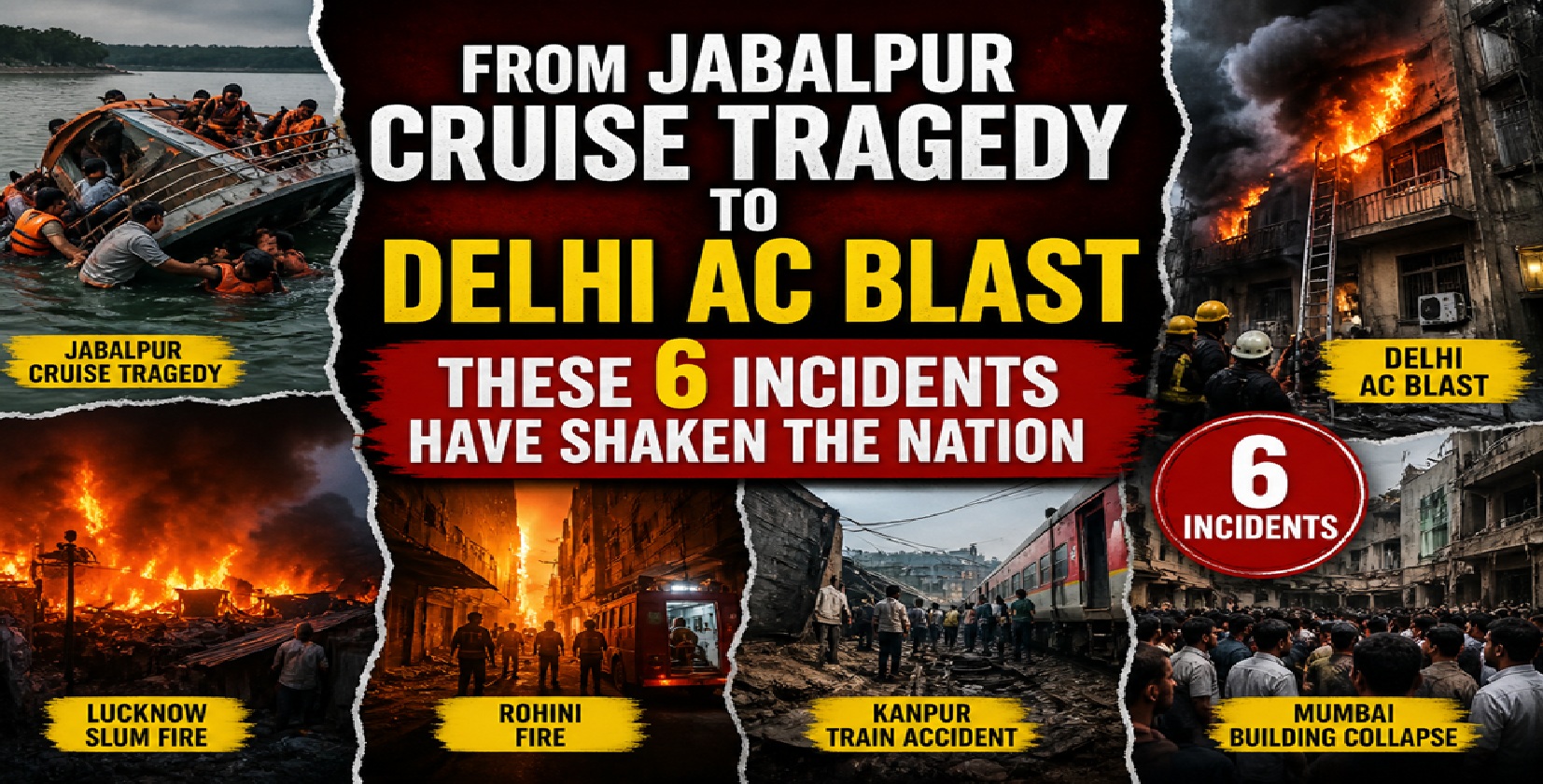
India in Shock: From Jabalpur Cruise Disaster to Delhi AC Blast—6 Tragedies That Exposed a Safety Crisis
India in Shock: From Jabalpur Cruise Disaster to Delhi AC Blast—6 Tragedies That Exposed a Safety Crisis
India in Shock: A deep analysis of six recent tragic incidents across India—from the Jabalpur cruise disaster to the Delhi AC blast—reveals systemic safety failures, regulatory lapses, and urgent lessons for the nation.
From Jabalpur Cruise Tragedy to Delhi AC Blast: A String of Disasters Exposes India’s Safety Gaps
Amit Kaul – For Digital Desk, Bengaluru: May 3, 2026 – In recent weeks, India has witnessed a disturbing sequence of tragic incidents that have shaken public confidence in safety systems. From fatal fires in densely populated urban areas to catastrophic accidents in recreational spaces, these events are not isolated anomalies—they reflect deeper structural and regulatory shortcomings. The Jabalpur cruise tragedy and the Delhi AC blast are among six such incidents that have reignited concerns about governance, preparedness, and accountability.
https://aamnewsnetwork.com/nida-khan-missing-nashik-tcs-conversion-case-husband-misleading-police/
Delhi AC Blast: A Preventable Urban Tragedy
The early morning fire in Delhi’s Vivek Vihar, which claimed nine lives, underscores a recurring urban hazard—electrical fires triggered by faulty appliances and poor infrastructure. Reportedly caused by a short circuit in an air conditioner, the blaze rapidly engulfed a residential building, leaving little time for occupants to escape.
While emergency services managed to rescue several individuals, the incident raises critical questions: Were fire safety norms followed? Did the building have functional fire exits, extinguishers, or alarms? In many Indian cities, compliance with fire safety regulations remains inconsistent, particularly in older or unauthorized constructions. The incident highlights how a single point of failure—an AC unit—can escalate into a deadly event due to systemic negligence.
India in Shock – Jabalpur Cruise Tragedy: Nature Meets Negligence
The cruise boat disaster in the Bargi Dam reservoir near Jabalpur paints a different but equally troubling picture. What began as a leisure outing turned fatal when sudden high-speed winds—reaching up to 70 km/h—destabilized the vessel, causing it to capsize.
This tragedy raises concerns about risk assessment and operational protocols. Were weather warnings adequately monitored? Was the vessel equipped with sufficient life jackets and emergency response mechanisms? Inland water tourism in India has grown rapidly, but regulatory frameworks often lag. The absence of strict enforcement of safety guidelines can turn natural weather variations into deadly threats.
India in Shock – Fires in Lucknow and Rohini: The Vulnerability of the Marginalized
Parallel to these high-profile incidents are fires in slum areas of Lucknow and Rohini, which destroyed homes and livelihoods within minutes. Unlike structured residential zones, informal settlements are particularly vulnerable due to overcrowding, the use of flammable materials, and a lack of access to firefighting infrastructure.
These incidents reveal a stark socio-economic dimension: disasters disproportionately affect those with the least resources. For many families, such fires mean not just temporary displacement but complete financial ruin. The lack of urban planning integration for these communities exacerbates their risk exposure.
India in Shock: A Pattern of Systemic Failures
When examined collectively, these six incidents reveal recurring themes:
- Regulatory Lapses: Whether in building safety or tourism operations, enforcement of existing rules remains weak.
- Infrastructure Deficiencies: Aging electrical systems, poor construction standards, and a lack of safety equipment amplify risks.
- Emergency Preparedness Gaps: Delayed response times and inadequate local preparedness worsen outcomes.
- Public Awareness Deficit: Many citizens remain unaware of basic safety protocols, from fire evacuation to emergency response.
These are not new issues, yet their persistence indicates a failure to translate lessons from past tragedies into actionable reforms.
The Human Cost Beyond Numbers
Beyond statistics, these incidents have left deep emotional and psychological scars. Families have lost loved ones, survivors carry trauma, and entire communities are forced to rebuild from scratch. The scenes of anguish—people wailing, searching for missing relatives, or sifting through ashes—serve as a grim reminder of the human cost of systemic neglect.
https://digitalamitkaul.online/jabalpur-cruise-tragedy-death-toll-11-bargi-rescue-analysis/
The Way Forward: From Reaction to Prevention
India’s disaster response mechanisms have improved over the years, but the focus remains largely reactive. What is urgently needed is a shift toward prevention:
- Strict Enforcement: Authorities must ensure compliance with fire safety and operational guidelines through regular audits and enforcement measures, including penalties.
- Technology Integration: Early warning systems, smart sensors, and real-time monitoring can help mitigate risks.
- Urban Planning Reforms: Inclusive planning that integrates informal settlements into safety frameworks is critical.
- Public Education Campaigns: Awareness drives on fire safety, emergency exits, and disaster response can save lives.
Conclusion
The recent series of tragedies—from Jabalpur to Delhi—should not be viewed as isolated incidents but as warning signals. They expose vulnerabilities that cut across geography, infrastructure, and governance. Unless addressed with urgency and seriousness, such incidents will recur, each time leaving irreversible damage. The question is not whether another incident will occur—but whether the nation will act decisively before it does.
Author Bio:
Amit Kaul is a seasoned journalist and digital content strategist with over a decade of experience covering business, technology, finance, and digital economy trends. Based in Bengaluru, India, he specializes in producing high-quality, data-driven news articles optimized for global audiences and digital platforms. Amit is passionate about financial inclusion, fintech innovations, and economic developments that shape India and the world. His work has been featured on multiple news portals and Google News platforms, providing readers with timely and reliable insights.