
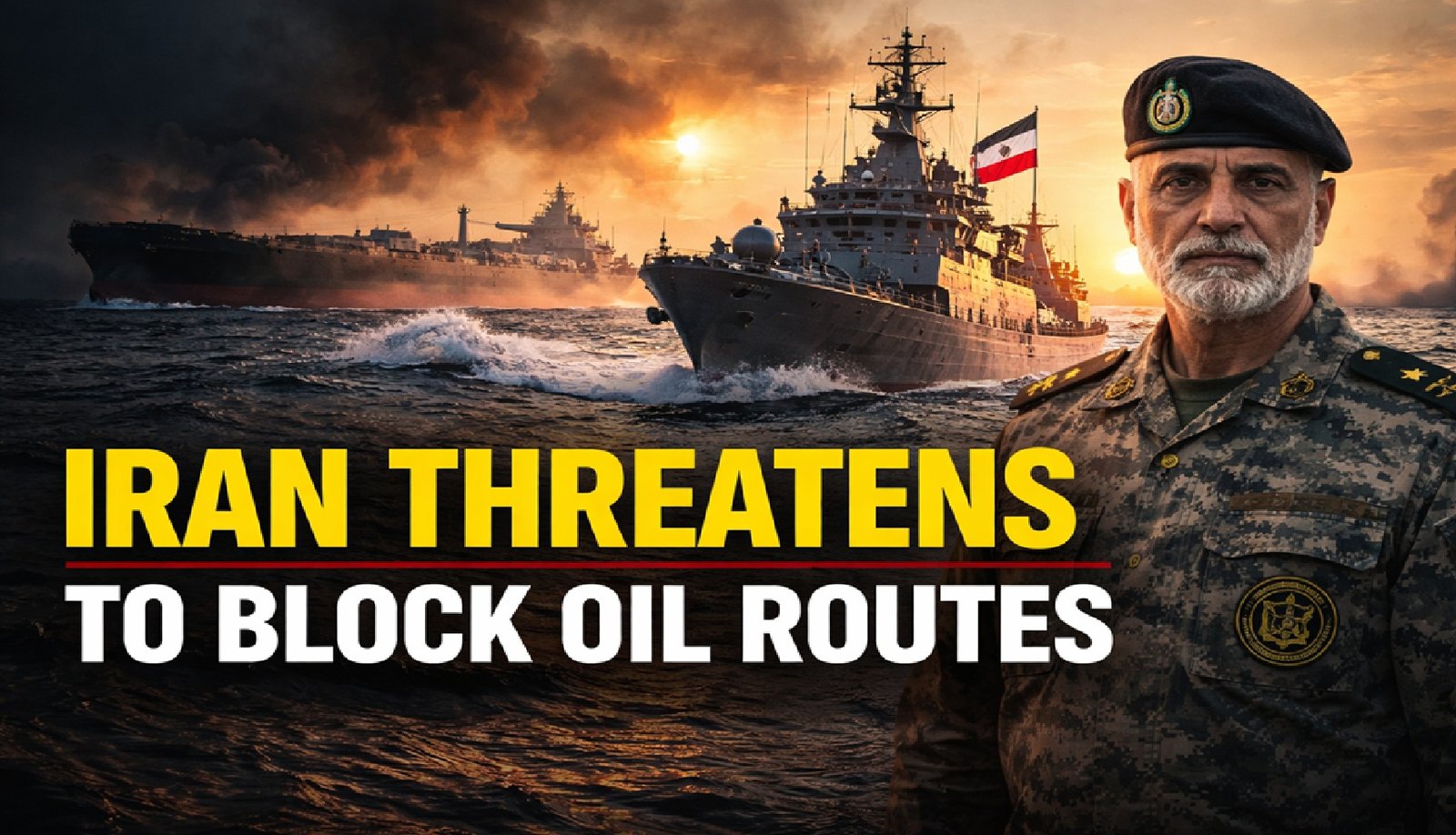
Iran Threatens to Block Key Oil Routes as Tensions Escalate Over US Naval Blockade
Iran Threatens to Block Key Oil Routes as Tensions Escalate Over US Naval Blockade
Iran Threatens to Block Key Oil Routes: Iran warns it could shut down the Persian Gulf and Red Sea trade routes amid rising tensions with the United States over a naval blockade, raising fears of global energy disruption.
Iran Escalates Rhetoric Amid Rising US Tensions
Amit Kaul – For Digital Desk, Bengaluru: April 15, 2026 – A fresh wave of geopolitical tension has emerged in the Middle East after Iran issued a stark warning against the United States, threatening to block critical global shipping routes if Washington continues its naval blockade of Iranian ports.
The warning, delivered via Iranian state television, marks a significant escalation at a time when diplomatic efforts between the two nations appear to be faltering. Iranian military officials have framed the US action as a violation of an informal ceasefire understanding, further complicating an already fragile situation.
At the center of the dispute lies control over some of the world’s most vital maritime corridors—including the Persian Gulf, the Red Sea, and the Sea of Oman—all of which play a crucial role in global trade and energy supply.
https://digitalamitkaul.online/pakistan-iran-saudi-secret-deal-peace-talks-analysis/
Iran Threatens to Block Key Oil Routes: “We Will Not Allow Trade to Continue”
In a strongly worded statement, Iranian Central Command Chief Ali Abdollahi declared that Iran’s armed forces are prepared to take decisive action if the blockade persists.
According to the broadcast, Abdollahi stated that Iran “will not permit any exports or imports to continue” through these strategic waterways under current conditions. The statement signals a readiness to disrupt international shipping on a scale that could have far-reaching economic consequences.
The most critical chokepoint in this scenario is the Strait of Hormuz, through which roughly one-fifth of the world’s oil supply passes daily. Any attempt to restrict or block this narrow passage would likely trigger immediate volatility in global energy markets.
Breakdown of Talks Sparks Crisis
The latest escalation comes shortly after the collapse of US-Iran talks reportedly held in Pakistan. While details of the negotiations remain limited, sources suggest that disagreements over sanctions relief and regional security commitments led to the breakdown.
In response, the United States moved swiftly to impose a naval blockade targeting Iranian ports—an action Tehran has condemned as provocative and unlawful.
Iranian officials argue that such measures undermine diplomatic channels and could push the region closer to open confrontation. The rhetoric from Tehran suggests that patience is wearing thin and that further economic pressure could provoke a direct response.
Iran Threatens to Block Key Oil Routes: Contradictions on the Ground
Despite the heightened rhetoric, available maritime data paints a more nuanced picture. Shipping activity from southern Iranian ports appears to be continuing, albeit under increased scrutiny and risk.
Reports from Iranian media and international tracking systems indicate that vessels are still navigating through the Strait of Hormuz and reaching global markets. This suggests that while threats are being issued, a full-scale disruption has not yet materialized.
Analysts believe this discrepancy reflects a strategic signaling approach—where Iran is leveraging its geographic advantage to deter further US actions without immediately escalating into direct conflict.
Global Implications: Oil, Trade, and Security
Any disruption in these waterways would have immediate and severe consequences for the global economy. The Persian Gulf and Red Sea routes are essential for transporting oil, liquefied natural gas, and a wide range of commercial goods.
Energy markets are particularly vulnerable. Even the perception of instability in the Strait of Hormuz can drive oil prices upward, impacting everything from fuel costs to inflation worldwide.
Additionally, countries heavily dependent on Middle Eastern energy exports—including major economies in Asia and Europe—would face supply chain disruptions and increased costs.
Security concerns are also mounting. Increased naval presence from multiple countries, coupled with the risk of miscalculation, raises the possibility of accidental clashes that could spiral into a broader conflict.
Iran Threatens to Block Key Oil Routes: Strategic Posturing or Imminent Action?
Experts remain divided on whether Iran’s threats represent imminent action or calculated brinkmanship. Historically, Tehran has used such warnings as leverage in negotiations, particularly when facing economic sanctions or military pressure.
However, the current context—marked by failed diplomacy and direct military measures—adds a layer of unpredictability. The involvement of key global powers and the strategic importance of the region mean that even limited escalation could have outsized consequences.
https://aamnewsnetwork.com/hezbollah-vs-israel-war-survival-analysis/
What Comes Next?
The coming days will be critical in determining whether tensions de-escalate or intensify further. Diplomatic backchannels may still offer a path forward, but both sides appear entrenched in their positions.
For now, global markets and policymakers are watching closely, aware that any disruption in these waterways could trigger a ripple effect across the world economy.
As the situation unfolds, one thing remains clear: control over the world’s most vital shipping lanes is once again at the heart of a high-stakes geopolitical standoff.
Author Bio:
Amit Kaul is a seasoned journalist and digital content strategist with over a decade of experience covering business, technology, finance, and digital economy trends. Based in Bengaluru, India, he specializes in producing high-quality, data-driven news articles optimized for global audiences and digital platforms. Amit is passionate about financial inclusion, fintech innovations, and economic developments that shape India and the world. His work has been featured on multiple news portals and Google News platforms, providing readers with timely and reliable insights.



Pingback: BRICS 2026 Summit: BRICS CCI Announces Governing Body Elections Ahead of India Summit - DNN
Pingback: Russia Unleashes Deadliest Strike of 2026 on Ukraine: 650 Drones and Missiles Hit Kyiv, 16 Killed - DNN
Pingback: Iran Dismisses Trump’s Uranium Claim: “Not a Gram Will Leave the Country” Amid Expanding War Talks - DNN
Pingback: Iran Slams US Bonds as ‘Pretense,’ Questions Safe-Haven Status - DNN