
Peace Talks vs Secret Pact: Is Pakistan Playing a Double Game Between Iran and Saudi Arabia?
Peace Talks vs Secret Pact: Is Pakistan Playing a Double Game Between Iran and Saudi Arabia?
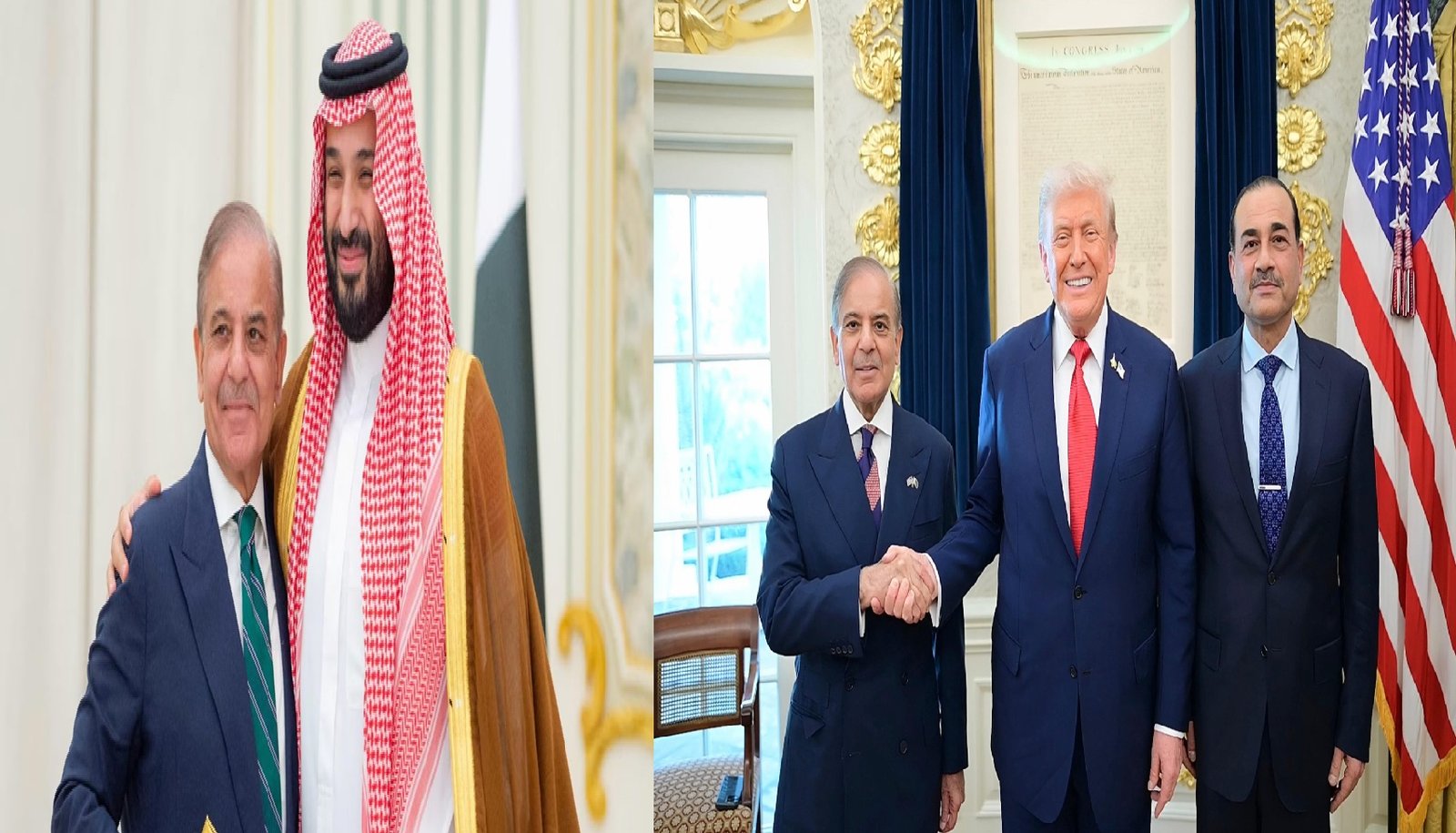
Peace Talks vs Secret Pact: Pakistan hosts US-Iran peace talks while secretly deploying jets to Saudi Arabia under a defense pact. Is Islamabad risking trust with Iran amid rising Middle East tensions?
Peace Talks on One Side, Private Deal on the Other: Will Pakistan Betray Iran?
Amit Kaul – For Digital Desk, Bengaluru: April 14, 2026 – Pakistan’s strategic balancing act in the Middle East has entered a highly sensitive phase, raising questions about its credibility as a neutral mediator. While Islamabad positions itself as a peace broker between the United States and Iran, recent developments suggest a parallel track of military cooperation with Saudi Arabia that could undermine that very role.
At the heart of the controversy is a reported deployment of Pakistani fighter jets to Saudi Arabia—an action that has sparked debate over whether Pakistan is quietly choosing sides in an increasingly volatile regional conflict.
https://aamnewsnetwork.com/strait-of-hormuz-reopening-global-trade-impact-analysis/
Peace Talks vs Secret Pact: A Quiet Military Deployment Raises Eyebrows
According to emerging reports, Pakistan has dispatched a contingent of fighter jets and support aircraft to Saudi Arabia’s King Abdulaziz Air Base in the Eastern Province. The move, executed under a Strategic Mutual Defense Agreement (SMDA) signed in 2025, has not been publicly highlighted by Pakistani authorities, adding to its sensitive nature.
The agreement reportedly stipulates that any attack on Saudi Arabia would be treated as an attack on Pakistan, obligating Islamabad to provide military assistance. However, what makes this arrangement controversial is its asymmetry: Saudi Arabia is not bound by a similar obligation to defend Pakistan.
This unilateral clause has raised strategic concerns within policy circles, as it potentially places Pakistan in a position where it may be drawn into a broader Middle Eastern conflict without guaranteed reciprocal support.
Historical Roots of Pakistan-Saudi Defense Ties
The Pakistan-Saudi defense relationship is not new. It dates back decades, beginning with a confidential agreement in 1982, followed by a training and logistics pact in 2005, and further refinements between 2021 and 2024. The 2025 SMDA appears to be a continuation—and expansion—of this longstanding military cooperation.
Saudi Arabia has historically relied on Pakistan for military training, advisory roles, and strategic depth. In return, Pakistan has benefited from financial aid, oil support, and diplomatic backing, especially during times of economic stress.
However, the timing of this latest deployment is what makes it geopolitically significant.
Peace Broker or Strategic Player?
Pakistan recently hosted ceasefire negotiations between the United States and Iran in Islamabad, positioning itself as a neutral facilitator in one of the most critical conflicts in the region. These talks, however, ended without a breakthrough, and the temporary ceasefire is set to expire on April 21.
The optics of hosting peace talks while simultaneously strengthening military commitments to Saudi Arabia—a regional rival of Iran—creates a perception problem for Islamabad.
From Iran’s perspective, such actions could be interpreted as duplicity. Tehran has long been wary of Saudi influence in the region, and any visible Pakistani alignment with Riyadh may strain Islamabad-Tehran relations.
Peace Talks vs Secret Pact: Domestic and Regional Pressures
Pakistan’s internal dynamics further complicate the situation. The country has a significant Shia population, many of whom hold cultural and religious affinities with Iran. Any overt or covert tilt towards Saudi Arabia could trigger domestic discontent and sectarian sensitivities.
On the other hand, Pakistan’s economic vulnerabilities make its relationship with Saudi Arabia crucial. Riyadh has repeatedly provided financial bailouts and oil on deferred payments, making it an indispensable partner for Islamabad.
Additionally, Pakistan maintains strategic ties with the United States, which adds another layer to its diplomatic calculus. Balancing relations between Washington, Tehran, and Riyadh is not just complex—it may be unsustainable in the long run.
Strategic Risks Ahead
Pakistan’s dual-track approach carries significant risks:
- Loss of Credibility: Acting as a mediator requires trust. Any perception of bias could diminish Pakistan’s role in future negotiations.
- Regional Entanglement: The defense pact could pull Pakistan into a direct conflict if tensions escalate between Iran and Saudi Arabia.
- Domestic Instability: Sectarian tensions could rise if the public perceives favoritism toward one side.
- Diplomatic Fallout: Iran may reassess its relationship with Pakistan, impacting border security and trade.
Peace Talks vs Secret Pact: A High-Stakes Balancing Act
Pakistan’s foreign policy has often relied on strategic ambiguity—maintaining relationships with competing powers without fully committing to any one side. However, in today’s polarized geopolitical environment, such ambiguity is becoming increasingly difficult to sustain.
As the ceasefire deadline approaches and tensions in the Middle East continue to rise, Islamabad’s next moves will be closely watched—not just by Iran and Saudi Arabia, but by the global community.
The question remains: Can Pakistan continue to walk this tightrope, or will it be forced to make a definitive choice?
https://digitalamitkaul.online/iran-india-relations-us-blockade-trump-strait-of-hormuz/
Conclusion
Pakistan’s attempt to play both mediator and military ally reflects the complexities of modern geopolitics. While the strategy may offer short-term flexibility, it risks long-term consequences if trust erodes on either side. In a region where alliances are rapidly shifting, even a single misstep could have far-reaching implications.
Author Bio:
Amit Kaul is a seasoned journalist and digital content strategist with over a decade of experience covering business, technology, finance, and digital economy trends. Based in Bengaluru, India, he specializes in producing high-quality, data-driven news articles optimized for global audiences and digital platforms. Amit is passionate about financial inclusion, fintech innovations, and economic developments that shape India and the world. His work has been featured on multiple news portals and Google News platforms, providing readers with timely and reliable insights.


Pingback: Iran Threatens to Block Key Oil Routes as Tensions Escalate Over US Naval Blockade - DNN