
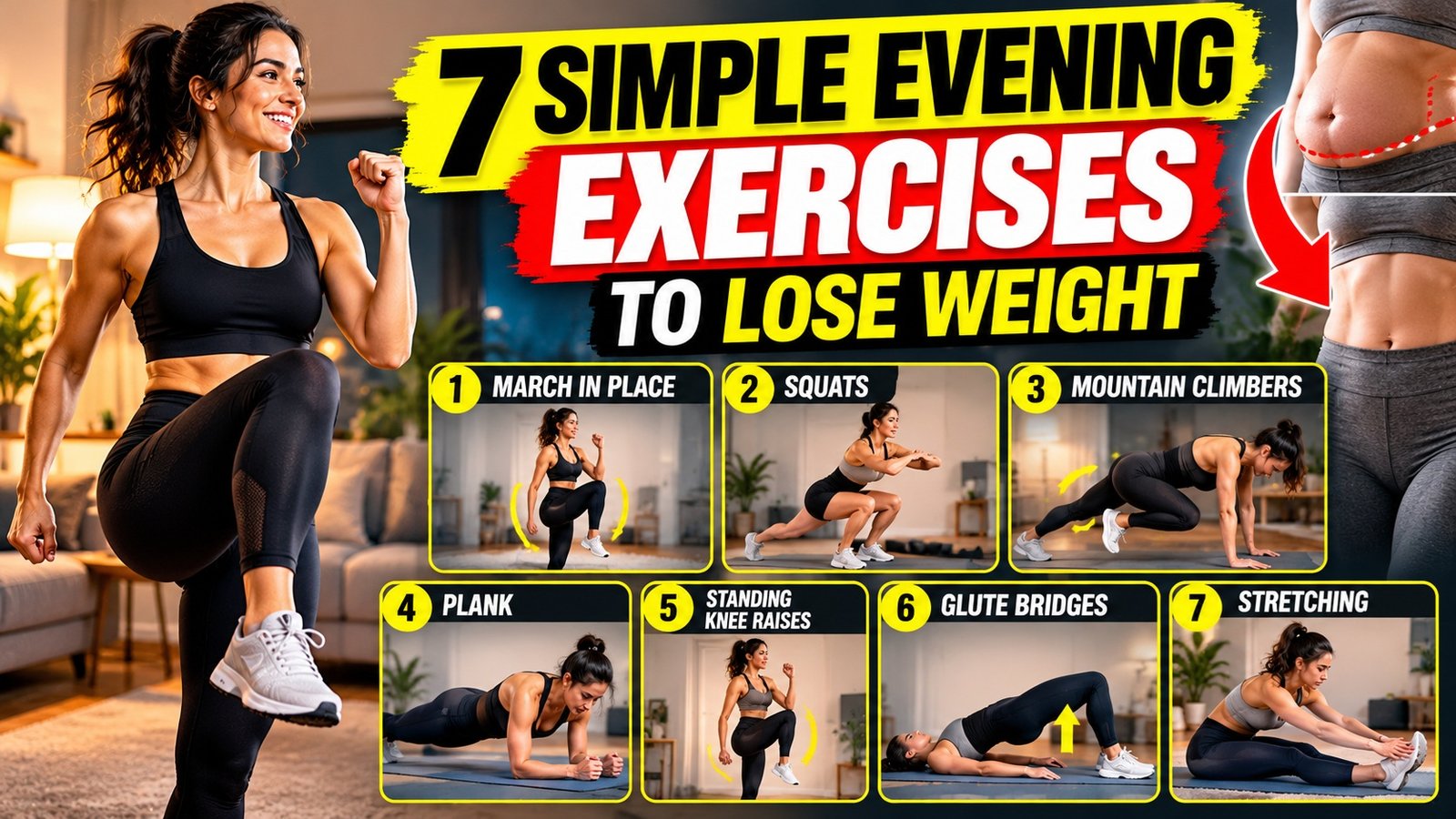
7 Simple Evening Exercises for Weight Loss: An Easy 20-Minute Workout You Can Do at Home
7 Simple Evening Exercises for Weight Loss: An Easy 20-Minute Workout You Can Do at Home
Discover 7 simple evening exercises for weight loss, including squats, planks, and marching in place. Try this beginner-friendly home workout.
HEALTH & FITNESS | WELLNESS | OCTOBER 30, 2026 – Losing weight doesn’t necessarily mean waking up at 5 a.m., joining an expensive gym,m or pushing yourself through exhausting workouts. Sometimes, the most effective fitness routine is one you can comfortably fit into your everyday life.
For people who spend long hours sitting at a desk, commuting or managing household responsibilities, evenings can provide an excellent opportunity to become more active.
The good news? You don’t need fancy equipment or an elaborate training programme to get started.
A combination of gentle cardiovascular movement, bodyweight strength exercises and stretching can help increase physical activity, improve fitness and support sustainable weight management.
However, exercise alone does not guarantee weight loss. Long-term results generally depend on overall calorie balance, nutrition, sleep, and consistent physical activity.
Here are seven simple evening exercises that can help you build a healthier routine, even if you’re a complete beginner.
1. March in Place: Start With Five Minutes of Movement – 7 Simple Evening Exercises for Weight Loss
Marching in place might seem too easy to make a difference, but it is an accessible way to begin exercising.
This low-impact movement gradually raises your heart rate, engages your leg muscles,s and helps prepare your body for more demanding activity.
How to do it:
Stand upright with your feet hip-width apart. Begin lifting your knees alternately while swinging your arms naturally. Gradually increase your pace while maintaining comfortable breathing.
Recommended duration: 3–5 minutes.
Why it helps: Brisk marching contributes to daily physical activity and calorie expenditure without requiring equipment or much space.
https://aamnewsnetwork.com/soi-mudra-for-quick-digestion-and-nutrient-absorption/
2. Bodyweight Squats: Strengthen Your Legs and Hips
Squats are among the most useful strength-training exercises for beginners because they work several large muscle groups simultaneously.
They primarily target the quadriceps, glutes, es and hamstrings while also engaging muscles that stabilize your trunk.
How to do it:
Stand with your feet approximately shoulder-width apart. Bend your hips and knees as though sitting into a chair. Keep your heels grounded and your knees aligned with your toes. Return to standing.
Recommended repetitions: 10–12 repetitions, for 1–2 sets.
Why it helps: Squats improve lower-body strength and contribute to maintaining muscle during weight loss. Building strength also supports everyday activities such as climbing stairs.
Beginners can use a sturdy chair for support.
3. Mountain Climbers: Add a Cardio Challenge- 7 Simple Evening Exercises for Weight Loss
Mountain climbers combine core stabilization with continuous leg movement, making them a demanding bodyweight exercise.
They challenge the shoulders, abdominal muscles,les and legs while increasing cardiovascular effort.
How to do it:
Begin in a high plank position with your hands beneath your shoulders. Bring one knee toward your chest, return it to the starting position, and repeat with the opposite leg.
Move slowly at first, keeping your hips relatively steady.
Recommended duration: 20–30 seconds, followed by a short rest.
Why it helps: Mountain climbers provide a combination of muscular endurance and cardiovascular activity, contributing to overall energy expenditure.
If the exercise feels too difficult, place your hands on a stable elevated surface and perform slower knee drives.
4. Plank: Build Core Strength and Stability
Planks may look simple, but maintaining proper alignment requires sustained muscular effort.
Unlike exercises involving repeated movements, a plank is an isometric exercise, meaning the muscles work while the body remains relatively stationary.
How to do it:
Place your forearms on the floor, keeping your elbows beneath your shoulders. Extend your legs behind you and maintain a straight line from your head to your heels.
Engage your abdominal muscles without holding your breath.
Recommended duration: 20–30 seconds for beginners, progressing toward 60 seconds as strength improves.
Why it helps: Planks strengthen the core and improve trunk stability. They do not specifically burn belly fat, but they can complement an overall weight-management programme.
5. Standing Knee Raises: Move More Without Jumping – 7 Simple Evening Exercises for Weight Loss
Not everyone enjoys jumping exercises, particularly after a long working day.
Standing knee raises offer a lower-impact alternative that can be performed almost anywhere.
How to do it:
Stand tall with your feet hip-width apart. Lift your right knee toward your chest, lower it,t and repeat with your left knee.
Maintain an upright posture and engage your abdominal muscles gently.
Recommended duration: 45–60 seconds.
Why it helps: This exercise engages the hip flexors, challenges balance,ce and provides additional movement that contributes to your daily activity level.
Beginners can hold a wall or chair for balance.
6. Glute Bridges: Activate Muscles After Sitting All Day
Spending hours sitting can leave your hips feeling stiff and your lower-body muscles underused.
Glute bridges are a simple floor exercise that strengthens the gluteal muscles and improves hip-extension strength.
How to do it:
With your feet flat on the ground and your knees bent, lie on your back. Tighten your abdominal muscles and lift your hips until your shoulders, hips, and knees form a relatively straight line.
Pause briefly before lowering your hips slowly.
Recommended repetitions: 12–15 repetitions, for 1–2 sets.
Why it helps: Stronger glutes support walking, climbing stairs, and other everyday movements. Glute bridges are useful for muscular conditioning, although they are not a major calorie-burning exercise by themselves.
7. Gentle Stretching: Finish Your Evening Workout Comfortably
Stretching is often the first thing people skip when they are short on time.
Although stretching does not burn substantial calories, it can improve flexibility and help transition from exercise to a more relaxed evening.
How to do it:
Spend a few minutes stretching your hamstrings, calves, hips, shoulders,s and back. Move slowly and avoid bouncing or forcing uncomfortable positions.
Recommended duration: 3–5 minutes.
What helps: Gentle stretching supports flexibility and may reduce feelings of stiffness. It is a useful finishing activity, though evidence that stretching prevents delayed-onset muscle soreness is limited.
Your Beginner-Friendly 20-Minute Evening Workout Plan
You can combine the seven exercises into a practical routine without visiting a gym.
Exercise Suggested time
March in place 4 minutes
Bodyweight squats 2 minutes
Mountain climbers 2 minutes
Plank 2 minutes
Standing knee raises 2 minutes
Glute bridges 3 minutes
Gentle stretching 5 minutes
Total 20 minutes
The exercise blocks include time for rest, position changes, and repetitions. You do not need to perform mountain climbers or planks continuously for the full allocated time.
Beginners can start with 10–15 minutes and increase gradually.
Can Exercising in the Evening Really Help You Lose Weight?
One common misconception is that exercising at a particular time of day automatically produces better weight-loss results.
In reality, consistency and overall activity levels are generally more important than whether you exercise in the morning or evening.
The World Health Organization recommends that adults aim for 150–300 minutes of moderate-intensity aerobic physical activity weekly, or 75–150 minutes of vigorous activity, alongside muscle-strengthening activities on at least two days.
A 20-minute evening routine can contribute toward these goals, particularly when combined with regular walking and other movement throughout the day.
For weight management, it is also important to maintain balanced nutrition, adequate sleep and realistic expectations.
Avoid expecting rapid changes after only a few sessions. Sustainable progress generally develops over weeks and months.
https://digitalamitkaul.online/affordable-ways-to-stay-fit-on-a-budget/
The Bottom Line
You don’t need an expensive gym membership or a complicated exercise programme to begin improving your fitness.
Marching in place, squats, mountain climbers, planks, standing knee raises, glute bridges and stretching provide a simple combination of movement, strength and flexibility.
The biggest benefit comes from making exercise a consistent habit rather than pursuing extreme workouts.
Start with what you can comfortably manage, progress gradually, and remember that sustainable weight loss is built through overall lifestyle habits—not one exercise or a particular time of day.
Medical Disclaimer: This article provides general health and fitness information for educational purposes and is not a substitute for professional medical advice, diagnosis, or treatment. Consult a qualified healthcare professional before beginning a new exercise programme if you have an existing medical condition, are pregnant, are recovering from an injury, or have concerns about exercise safety. Stop exercising if you experience chest pain, dizziness, or unusual breathlessness.